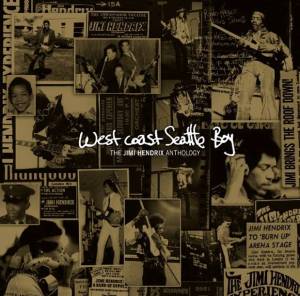
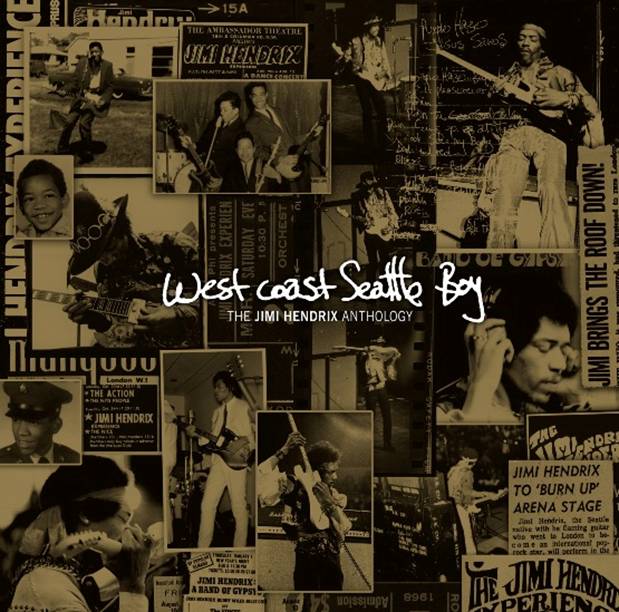
 The new Jimi Hendrix Anthology West Coast Seattle Boy bonus DVD Voodoo Child answers a lot of questions about Jimi’s time in Nashville, which for the most part is an unknown piece of the puzzle. Jimi not only formed his first band The King Kasuals with Billy Cox on Bass while in Nashville but it was here that he cut his teeth with some of the best Rhythm and Blues acts of the day.
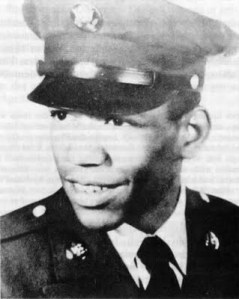
Jimi Hendrix at Ft. Campbell, KY
The first step to Nashville for the Seattle, Washington native was joining the Military. “I was 18. I figured I would have to go into the Army sooner or later, so I walked into the first recruiting office I saw and volunteered. I wanted to get everything over with before I got into music as a career so they wouldn’t call me up in the middle of something that might be happening. “
Jimi wasn’t able to sign up as a musician because he had no formal musical training so he joined the most elite outfit he could. The 101st Airborne Division, The Screaming Eagles of Ft. Campbell, Kentucky. He wrote home “Well Dad, here I am exactly where I wanted to go in the 101st Airborne.”

Young Jimi with Red Danelectro
Jimi wanted to succeed for the sake of his family name as a member of the Screaming Eagles in the U.S. Army. One of the first requests home was to send his guitar, “P.S. Please send my guitar as soon as you can. I really need it now.”
The one thing that Jimi gave up when he went into the military was about to become what he always wanted; music would become the center focus of his life. He was in the military for thirteen months when he got his ankle caught in a sky hook and he broke it. He had become frustrated with the military life and the inability to play music and decided to tell them he hurt his back too. They let him out, July 2, 1962, just prior to the troop increase in Vietnam.

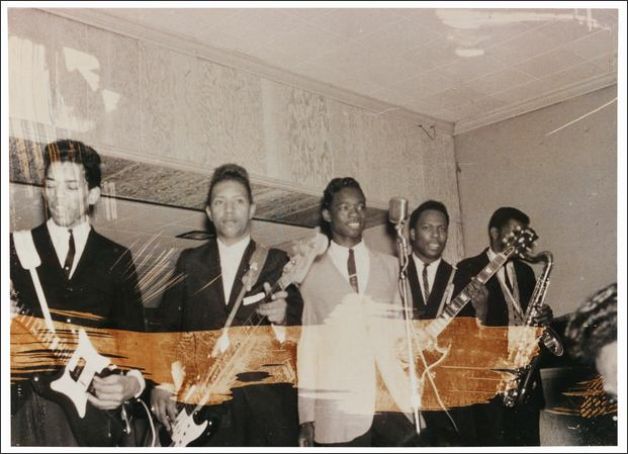
Photo Date 1963, probably at Del Morocco, Jimmy (Jimi) ,notice Epiphone Coronet, Silvertone Amp, Billy Cox, 3rd down, Nice Fender Jazz Bass, Fender Amp. Jimi was notorious for letting his stuff go into hawk.
Jimi became more serious about the guitar while still in the Army and decided to head south of Kentucky a few short miles to Nashville to see if he could earn money playing the guitar. He moved into a housing development during the civil rights movement. In fact he was arrested once along with Billy Cox in 1962. “Every Sunday we would go down to watch the race riots. We took a picnic basket because they wouldn’t serve us in the restaurant…Sometimes if there was a good movie on Sunday there wouldn’t be any race riots.”

The Bonnevilles, 1962, Clarksville, TN at The Pink Poodle just prior to move to Nashville.
Ft. Campbell had been where Jimi had become friends with Billy Cox, a Bass player born in West Virginia, raised in Pittsburg, PA who also settled into Nashville for the music opportunities.
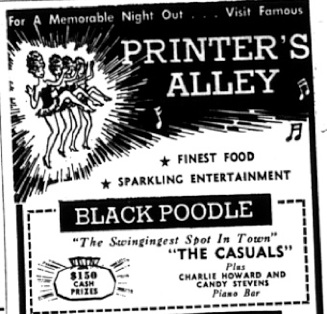
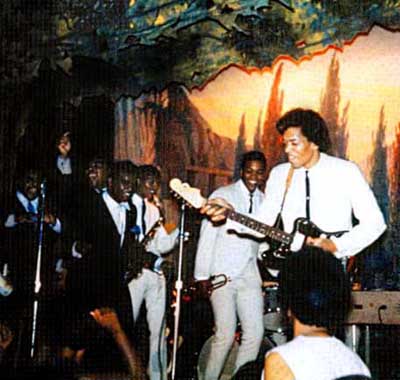
Together. they formed The King Kasuals. The band played at clubs like the Del Morocco on Jefferson Street as well as gigs on Printers Alley. Jimi did get a little studio time, but, engineers found him too experimental when he got to recording as a back up musician and Jimi had a hard time making some extra money as a studio musician.
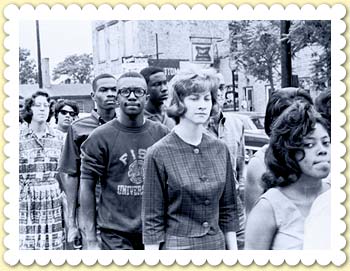
Mid-60’s Nashville Civil Rights March
Hendrix waited for his Army buddy and bassist Billy Cox to get out and together they came down the road to Nashville to form their first band – King Kasuals. King Kasuals became the house band of the now-gone Club Del Morocco (the owner of which ended up bailing the two out of jail after a Civil Rights demonstration downtown!). Hendrix played at so many of the clubs in Printers Alley and along Jefferson Street – places where the likes of Etta James and James Brown were performing. Hendrix took his guitar everywhere in Nashville – on the bus, to the store, on a walk. Nashville is where he really developed his guitar playing. He said so himself: “That’s where I learned to play really…Nashville.” – 365nashville.com
 “Hendrix credits Nashville as the place that he really learned how to play guitar. That still freaks out most people who think of Nashville as just country music,” says Joe Chambers, the founder of the Musicians Hall of Fame in Nashville.
Chambers recounts how in 1962 Hendrix wound up at the army base at Ft. Campbell, Kentucky, and met fellow musician Billy Cox. They became fast friends and a short time after moved to Nashville, some 60 miles away, and lived together on Jefferson Street, above a beauty shop called Joyce’s House of Glamour.
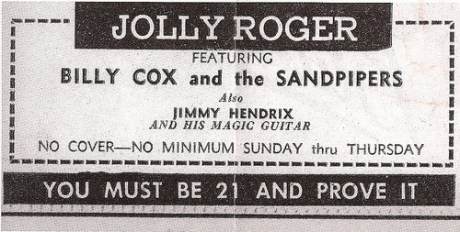 “I actually saw Jimi Hendrix one night at Printer’s Alley. He was in his private’s uniform,” says Norbert Putnam, a musician, studio owner and producer with a long list of credits in Nashville.
Hendrix soaked up the style of the blues players in the bars along Jefferson Street. “You gotta be pretty good to get their attention,” Chambers recalls his friend Billy Cox saying. “Jimi went to sleep with his guitar on, woke up with it on, walked out the door with it, and went to the movie theater with it.”
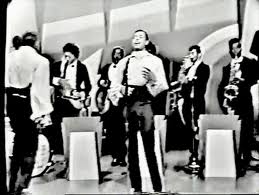
Jimi with Buddy and Stacey “Shotgun” Nashville TV Taping
Some of the first video footage ever shot of Hendrix was on Nashville’s WLAC Channel 5 television show Night Train. You can see him on a 1965 clip backing up Buddy & Stacy, looking freaky and sliding his hand over the front of his guitar’s neck. Chambers says Hendrix and Cox played the clubs on Jefferson as well as the club circuit from Murfreesboro to Tullahoma. – From Rock In The Country: Nashville’s Secret History By Davis Inman 12/17/2010, American Songwriter

King Kasuals, Jimi, Billy
Jimi left Nashville to be near his Grandmother in Vancouver in December of 1962 and played with a band called Bobbie Taylor and The Vancouvers, that featured Tommy Chong of comedy team, Cheech & Chong, until heading back to the south in the spring of 1963.
The gigs continued with Billy Cox and the band. Jimi continued developing his chops and playing wherever and whenever he could.
Jimi Hendrix did some uncredited session work while in Nashville and also played for current “Nashville’s Queen of The Blues” Marion James and Roscoe Shelton before leaving Nashville. Billy Cox also played bass for Marion James who still resides in Nashville and is signed to Ellersoul Records.
Billy Cox wrote two songs for Frank Howard & The Commanders and both Billy and Jimi played on the sessions for “I’m So Glad” and “I’m Sorry For You” during those Nashville days.
Billy Cox stated in a Nashville Scene interview in 2010 that he is in the process of writing a book about his time with Jimi Hendrix in Nashville; nobody could tell the story better than Billy and he hopes to clarify between myth and legend what happened in those early times.
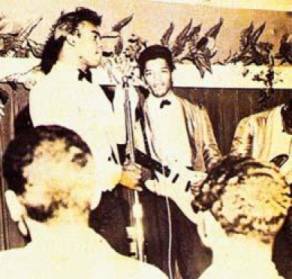
Jimi in Nashville
Imperials drummer Freeman Brown played with Hendrix while he was in Nashville. “There used to be a theater called the Ritz Theater down on Jefferson Street, it was there for the longest. We went to a show one day and Jimi carried his guitar in a shopping bag. He always kept his guitar with him. And every time he would just play, just play, just play; it was kind of like having a little baby to him.” “It was like a third arm, you know. And like he (Freeman) said, I saw him on a bus with it one day, you know, in a shopping bag, in a plastic bag, whatever. That’s the way he was. It was not unusual at all. Not usual at all,” confirms George Yates.
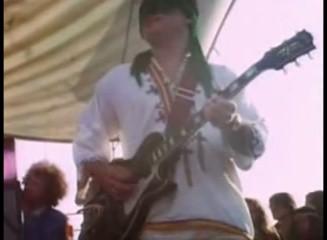
Larry Lee, 2nd guitar with Jimi Hendrix at Woodstock
“Jimi and I, being left-handed guitar players, just talked. We hit it off real smooth,” Yates recalls. “Everybody thought we were brothers. We were skinny, very young, and I guess, women chased us, you know. We played together one time. It was with a group called The Bonnevilles, and I believe Jimi named the group. His manager had us on the road one night, supposedly the three best guitar players in town- me, Jimi, and Larry Lee from Memphis (The same Larry Lee that played with Jimi at Woodstock). The people just went crazy because we were all doing crazy acts, you know, guitar behind the head, biting it with the teeth, falling on my knees, and I have bad knees because of it today. But Jimi was the showman. We were admirers of each other, you know.” – Night Train To Nashville by Tina Robin
It was at this time he met a promoter named Gorgeous George, who got him on as a touring guitarist. “The idea of playing guitar with my teeth came to me in a town in Tennessee. Down there you have to play with your teeth or else you get shot. Those people were really hard to please.“
The earliest known video of Jimi Hendrix was playing “Shotgun” with Buddy and Stacey at a Nashville television studio in May 1965.
It was a Soul package that came into Nashville featuring Sam Cooke, Solomon Burke, Jackie Wilson, BB King and Chuck Jackson that kick started his professional career. “I got a little job playing in the backup band. I learned a lot playing behind all those names every night.”
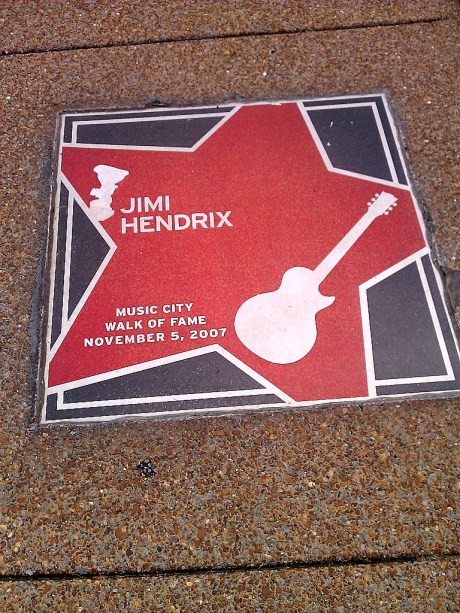
Jimi’s star across from Country Music Hall of Fame
He went on a 35 day tour covering most all of the south, the Seattle boy was now in the thick of a tour that took him to all parts of the country. He sent a postcard “Dear Dad, just a few words to let you know I made it to South Carolina. Tell everybody “Hello” with love, Jimmy”

Jimi with The Isley Brothers
While in New York, he entered an amateur contest at the Apollo Theater and won $25 after taking first place. It was there in New York that The Isley Brothers asked him to stay and play. He played with them for a while but he was ready to break out of being in the back up position and desired to direct his own career. He left The Isley Brothers when they made it back to Nashville on a tour stop.
He then joined a band that took him to Atlanta, Georgia where he met Little Richard and was asked to join his band. “Dearest Dad, I received your letter while I was in Atlanta. I’m playing with Little Richard now. We’re going toward the West Coast. We’re in Louisiana now. But my address will be in Los Angeles. “

Jimi with Little Richard
He only played with Little Richard for five months and left after not getting paid for a period of five and a half weeks. He was ready for a change after the Little Richard stint. “I couldn’t imagine myself for the rest of my life in a shiny Mohair suit with patent leather shoes and a patent leather hairdo to match. “
“I didn’t hear any guitar players doing anything new. I was bored out of my mind. I wanted my own scene making my own music. I was starting to see you could create a whole new world with the electric guitar because there isn’t a sound like it. “

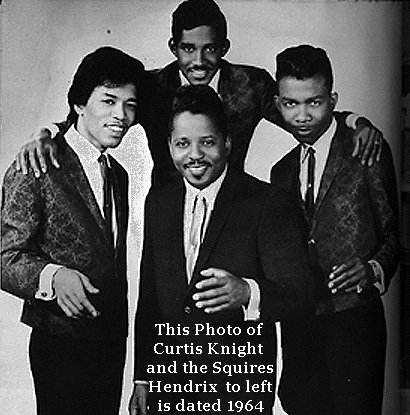
Curtis Knight and The Squires
He heard music in his mind that he wanted to do but he knew it was going to be hard to find people to do it with. “I went back to New York and played with this Rhythm and Blues group called Curtis Knight and The Squires. I also played with King Curtis and Joey Dee. “
It was after this period of time in Nashville, travelling with some of the greatest artists of the day that he became what the world knows as Jimi Hendrix. Chas Chandler, bassist for The Animalswas invited, by Keith Richards girlfriend at the time, Linda Keith (she also “loaned” Jimi one of Keith Richard’s guitars to Jimi), to see him play with his band, Jimmy James and The Blue Flames and that is where the usual story of Jimi Hendrix begins.

Band of Gypsies : Billy Cox, Jimi Hendrix, Buddy Miles, who had kept on Jimi for some time to get their own band going.
Although it may have been a short couple of years, his friend Billy Cox would rejoin him with Buddy Miles as Band of Gypsys and they recorded some of the funkiest three piece soul ever done. Billy would be with him at Woodstock and record and perform as a member of his band until he passed away. Billy still lives in Nashville.
Jimi went through many transitions in life, moving several times and being called by many different names, first, Johnny than James, “Buster”, Jimmy, with many knicknames along the way including “Chop Suey” and finally Jimi. Through all the changes, Jimi managed to be very positive as his guitar was like a magic carpet guiding him on his travels.
If Jimi had not joined the Army and started his journey through the south, his story might not have been what it became. By doing what other great guitarists do, be it Country or otherwise and joining the Nashville scene and becoming a touring musician he accelerated his abilities quickly and became the Voodoo Child with a mojo hand made of gold becoming the most important guitarist of his day, a great songwriter and the highest paid rock showman of his time.
Many of the quotes that are by Jimi Hendrix, were read by Bootsy Collins and are featured in the Documentary, Jimi Hendrix: Voodoo Child.
” Music is the most important thing. I’m thinking of my future. There has to be something new, and I want to be a part of it. I want to lead an orchestra with excellent musicians. I want to play music which draws pictures of the world and its space.” – Jimi Hendrx
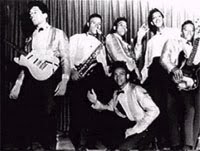
Jimmy James and The Blue Flames
Brad Hardisty, Nashville, TN thenashvillebridge@hotmail.com

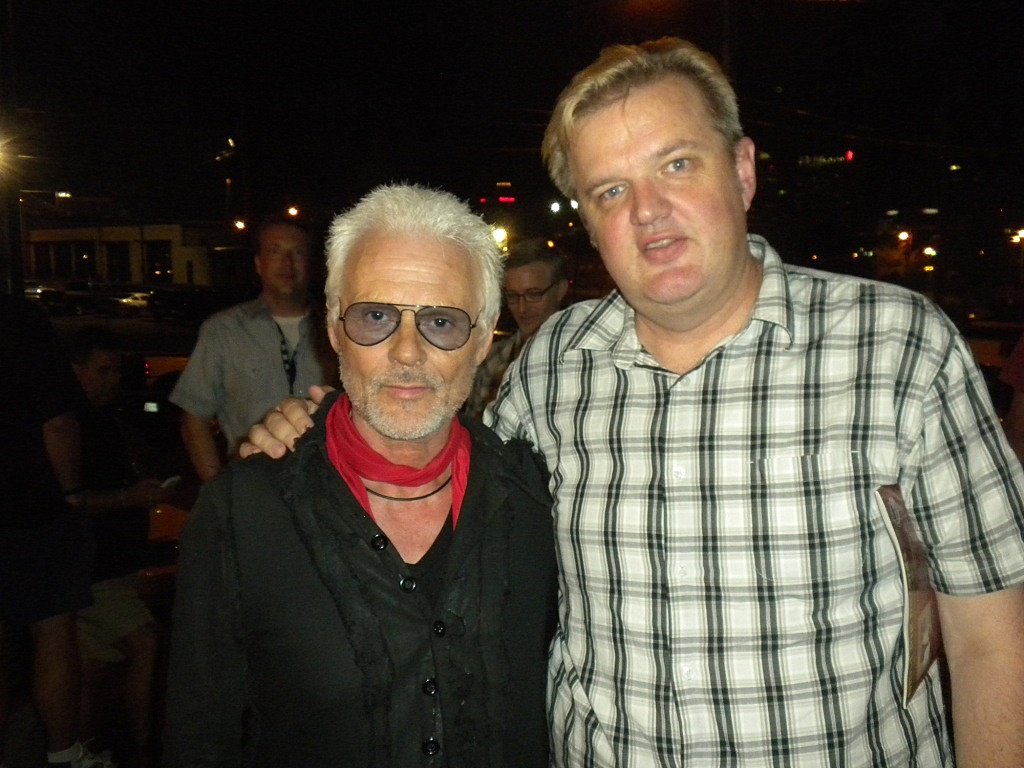

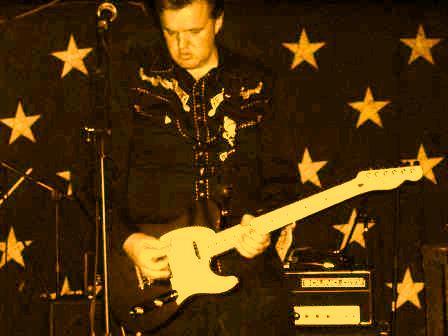
 Kat Pat has a couple of rare guitar tracks of Brad Hardisty as well as a never before heard version of “Spark The Flame” recorded live at The Nick in Birmingham, Alabama in 2006 with the band Furthermore featuring Brad on guitar as well as Danny Everitt on Bass, Peter Davenport on vocals and Daniel Long on drums.











 The Nashville Bridge