Archives for the year of: 2011

Leo Kottke burst onto the scene at the beginning of the Seventies with a fresh approach to the acoustic guitar, especially with open tuned fingerpicking style on 12 string that influenced generations of Guitarists after him, such as Pat Metheny, Michael Hedges and Tommy Emmanuel.  AEG Live/ The Messina Group will bring the Player’s Player live to TPAC’s James K. Polk Theater on Wednesday, March 16th.

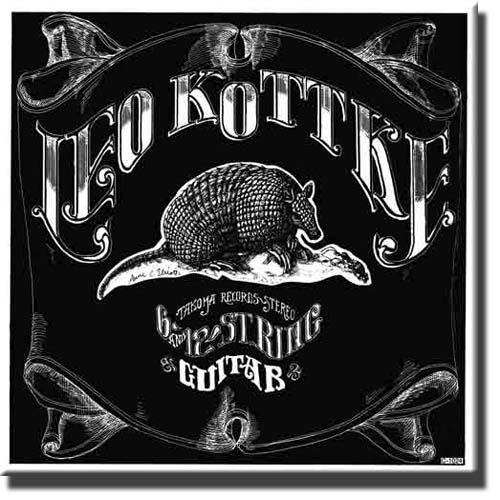
Leo is best known for his Polyphonic Syncopated Melodies and use of detuned obscure chords. His first album recorded in 1969, 6 and 12 String Guitar on Takoma Records, has been reissued many times as it was a blue print for what was possible, thinking outside the box, Leo was the Allan Holdsworth of the steel string acoustic.

Leo was so amazing as a solo performer and recording Artist that he was picked up by Capitol Records in the Seventies, releasing five albums by 1975 including Dreams and All That Stuff which peaked at #45 on the Billboard Charts. Leo then moved on to Chrysalis Records until 1983. The music business finally caught up with Leo’s forward process when he moved to New Age Label, Private Music in 1986. This was a productive time with a community of musicians looking for inventive composition achieving one of his highest chart positions with That’s What at #24 on the Billboard Charts.

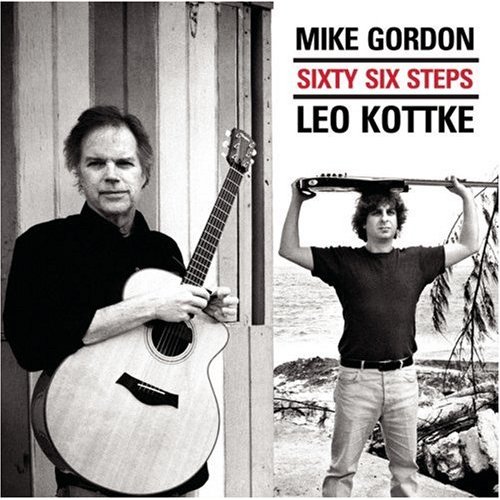
Leo has worked with several Artists including Lyle Lovett, Rickie Lee Jones, Chet Atkins, David Hidalgo and most recently released two critically acclaimed albums with Phish Bassist, Mike Gordon , Clone and Sixty Six Steps. Sixty Six Steps featured some interesting covers of “Sweet Emotion” the classic Aerosmith song as well as “Oh Well” the Peter Green penned Fleetwood Mac song.

Leo who was born in Athens, Georgia and grew up learning to play the style of Mississippi John Hurt in Muscogee, Oklahoma, eventually incorporated many influences from Delta Blues, Jazz and Folk Music. In much the same way as Mandolin Player Sam Bush and Banjo Man Bela Fleck he has always sought to re interpret traditional American Music in an ever expanding portfolio of methods.

When Leo had problems with tendonitis, he learned to find new tones without using fingerpicks, developing a more jazz fingered style method, as well as going the way of the Singer/Songwriter at times.  Despite being so advanced in his own style, Leo still is amazed at some of the prowess out there, “I hear people playing who baffle me. I can’t see how they’re doing it — either so soon because they’re so young or despite being laid up because they’re so old. It’s frustrating, this bafflement, only because I’ve never really done my homework, the quotidian, day-to-day scut work of concentrated study, and I owe it to people like Federico [Franco], or Snoozer [Quinn], to do that … they did. I admire these players”.

Leo’s life has been one of an ever changing music chameleon having started during the time of Bob Dylan and Jimi Hendrix through the New Age Music Era and in a way going full circle working with Jam Band Alumni Mike Gordon, the guitar has been there always,” It saved my life when I was a kid. I’d been sick. Now it is my life. I wouldn’t call it joy, but that’s in there. It’s more than joy — and it gives me the creeps just saying that — but it’s true.”

 Leo has played on several makes and types of guitars over the years before finally becoming a Signature Artist for Taylor Guitars with his own co-designed 12 string model.  The TPAC Polk Theater will be a great forum to connect with a guitar community for the most essential element to Nashville is the guitar and there are more guitar players in Nashville than anywhere else in the world and the best of the best will no doubt be in attendance on March 16th for the inspired playing and improvisation of Leo Kottke.

 – Brad Hardisty, Nashville, TN    thenashvillebridge@hotmail.com

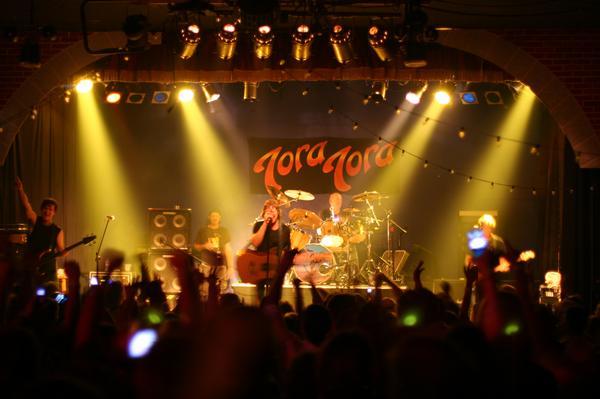
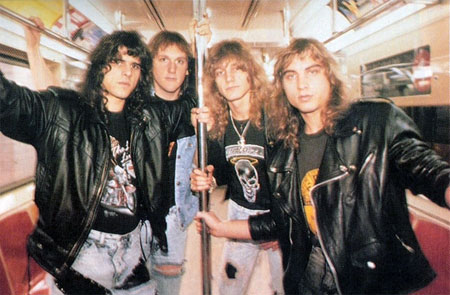
FnA Records will officially release the long anticipated Tora Tora follow up to Wild America; Revolution Day on February 28th on purerockradio.com at 8:30 PM Pacific Time live on the air from Las Vegas, Nevada with DJ Cory Draper playing some of the tracks and celebrating with all the original members of the band; Anthony Corder, Keith Douglas, Patrick Francis and John Patterson.

It has been a while since 1994 when this gem was recorded at Ardent Studios in Memphis, Tennessee just like the previous two albums. Anthony and I sat down for an Indian Lunch buffet at Tamarind on Demonbreum, just off Music Row in Nashville to reflect back on that time.  Tora Tora has been lucky over the last few years doing reunion shows and playing Rocklahoma in 2008.

The release of Revolution Day has been long anticipated since the fans have been getting their first taste of the music from Revolution Day live over the last couple of years. Tora Tora fans, especially in their hometown of Memphis, Tennessee were excited to know that Revolution Day was going to see the light of day.

Brad: Everybody in the band is still nearby?

Anthony: Yeah everybody is still based out of Memphis. We actually ended on great terms when the record deal was done. Our A&R Guy Brian was a great guy, he also signed Soundgarden.

B: So who was your Management then?

A: We were with Loud n Proud which was based out of Brooklyn. L’amour’s was a big heavy metal club and we used to go there and rehearse for a first tour which was our first trip out of town, when we were going to promote our record, it was our first big tour. We would go there and stay out on Staten Island in some Loft apartments, with three of our crew guys; there were seven of us staying there in a one bedroom apartment.  So we’re driving into Brooklyn every day to rehearse at L’amour’s and go by the management office.

B: You were recording at Ardent, right? But, rehearsing in New York?

A: Yeah, we went out for eight weeks after the first record I think. We worked our way on from Pennsylvania, out in the boonies, places like the Cat Club, Vinnie’s,

B: And this was right after the first release?

A: Yeah after Surprise Attack. At the end we were with Bill Graham Management. About the time we were ready to wrap the third record, Brian (A&R) was offered a very lucrative contract to go with another label.

B: How did you get signed?
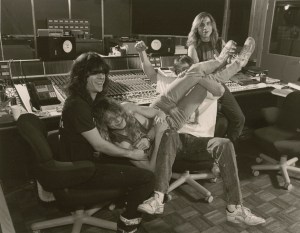
Tora Tora at Ardent during Wild America

A: Ardent had signed us to a production deal and they kept bringing A&R guys to Memphis to see us and A&M showed the most interest. They seemed the most genuinely interested in what was going on with the band. Brian (Artist Relations with A&M) was always really encouraging; he liked to hang out with us after our thing (in Memphis). We used to have this warehouse where we would showcase.

B: Was that like your practice space?

A: Yeah, we hung black garbage bags all over the wall and the front of the stage. Keith’s Dad had these 55 gallon blue barrels and we built a stage out of them. We put plywood on top of them and painted it. We would just recruit some of the Football players like from Ole Miss and they would run the door for us. They were security and the local DJ would announce us on the radio. He would say, “Hey tonight, don’t forget Tora Tora”. They would bring like long chairs and all kinds of stuff and just hang out and we would jam out all night. That’s where the record label came to see us play.

B: Did you have other bands playing gigs with you there?

A: Our first show was on Halloween and we had an opening act but after that we pretty much did our own thing.

B: Did you do the warehouse thing because there was pretty much one club or you had to open for a big name act?

A: The biggest problem was our crowd was under age so playing bars; they wouldn’t be able to get in. So it was a place, if you were under age where you could go and hang out and listen to lots of music. It was kinda cool. We did play at The New Daisy on Beale Street a lot. It’s like a little thousand seat Theater. We actually just played there in 2009 I think. It was kind of great to go back there and play in a place you grew up.

B: So what was going on around the time you did Revolution Day after a few years on the road?

A: About the time we got finished with recording our last, the third (Revolution Day) record, Keith our guitarist, was getting ready to have a Son, so he was thinking I don’t know if I’m up for doing another run on the road, maybe I’ll do the record, and of course we wanted him to go with us, we just said if you’re not going to go then we’re not going either. You know we had been playing together since we were kids.

B: So he didn’t think he would be able to do it?

A: Well, he just had a child that he wanted to be around. It was a big decision and at the time the other three of us weren’t married. Not to bring up anything negative, but it seemed like the timing was right to take a break, Brian (at A&M) was going and Keith was wanting to take some time off, so we were like you know what let’s just take a break and we’ll pick up where we left off or if we want to get back together we will.

B: So you kind of took a hiatus?

A: Yeah, and so we decided to do that and it took us I don’t know how long, fourteen years or something like that to get back. Everybody got back into their own life and had their things going on. I wanted to keep singing and I kept pounding it out with some other guys.

B: Were any of the guys playing in any bands or doing anything after Tora Tora?

A: Patrick actually did, he went on and did a thing with a band called Rail.

B: Was it the Rail that was on MTV and stuff back in the early eighties that won some contest and toured with Heart?

A: I don’t think so. Oh no.

B: When you started Tora Tora and got signed did you ever find out there were any other bands called Tora Tora?

A: We did, from the seventies I think.

B: Were they a U.S. Band?

A: Yeah, they were and they had a record called Made in Japan. It was funny.  I guess with the length of time and everything since their release we got permission and everything to get the rights to the name and go for it.

B: Nowadays with the internet, it is a lot easier to find out, but back then you would have to look through a library or for trademarks or something. Back then you wouldn’t know there was another band with your name unless you crossed regions. With a name like Tora Tora there was that possibility.

A: Right, we kind of found out on the back end, but it was enough time before we got the record deal and everything going.

B: When you were writing the music for Revolution Day there is a marked confidence in the playing.

A: We had grown so much out on the road. I mean on our first record we had never travelled. We didn’t have a lot of life experience. We just thought about dating girls, maybe catching a buzz or something. It was pretty limited but after our first record we spent two years out on the road and you could tell our eyes were just like opening.

B: Who were you touring with at the time?

A: We did a lot of touring on our own. We were brand new. We wanted to get out and get the chops, get our own crowd. It was about being in front of people, you know you can rehearse to death in a rehearsal room and hit every mark and great but when you play in front of people it turns into its own thing.

B: Now kids want to get in and do all these recordings and videos but what Rock and Roll is all about is going out and joining the circus.

A: Yeah we took three guys as our crew and went out and our A&R guy was there.

B: Did your A&R guy do merch for you?

A: No, He just wanted to go out with us on the road. It was great fun. I don’t know how other people work but he was pretty hands on.

B: That is really good though.

A: Yeah even Keith our guitar player got kind of close would hang with him. He would come up with all kinds of crazy stuff. One of my Birthdays, we were on our way to North Carolina or whatever and he would get ideas to go do stuff. There is nothing like being in a band together and just going out and doing stuff you like to do. We were getting so much better out on the road.

B: Well, when you think of the trilogy of Tora Tora albums it makes me think about Van Halen, on Van Halen it was just killer, and then when you get to Van Halen II, hey they have been out on the road, there just kind of more loose, relaxed and then Van Halen III it was like they thought we can do some crazy stuff, like with the drum beats and where they were going. It was kind of like Tora Tora was getting there, like now we can try some crazy stuff.

A: Yeah, we always rehearsed a lot so that when we got to the studio there were never any snares. Keith was always the perfectionist.  You know how it is, he was always creative. We were growing musically, but on that third record practiced a lot at an old studio around the corner from Ardent. We actually had done a lot of pre-production there for the Wild America record as well.

B: Are the first two A&M records still in print?

A: The first one (Surprise Attack) is, the second one is not. I think they only made about 300,000 units or something.

B: So what about Revolution Day?

A: I think we did stretch out musically.  We had a warehouse that was over by the airport and it was great we could get as loud as we want and there were planes like taking off. This was during the third record.

B: Did you know Rock City Angels when they were recording over at Ardent?

A: Yeah we knew them very well. I remember Bobby Durango and all those guys. Anyways, when we were at the warehouse, one of our crew guys had worked at Ardent and he was a great like Engineer guy and he could fix like anything in the world and he helped us mic up everything and did preproduction demos on 8 track cassette. That was some of the stuff we released on FnA Records.

B: Yeah some people are so into deep catalog stuff they are looking for stuff like that.

A: Yeah, I told FnA Records that was great even for us to have just to document that time.  We worked on that record for a long time and there are songs like “Little Texas” which is about this place in Mississippi where they are still toting stuff around it’s a farm area, a town called Little Texas, Mississippi. Lyrically it had stuff about my roots, more introspective.

B: So “Little Texas” is about where you grew up?

A: Yeah, a little bit. I mean the real place I’m from is called Avalon, Mississippi. It’s where Mississippi John Hurt is from, and you know cotton gins and little stores,

B: You know talking about Mississippi John Hurt; that was one of the blues players they went back to in the sixties like Son House.

A: My Granddad knew him. When I grew up, my family on my Mom’s side, they were all like porch players and my Mom played piano and my Uncle played guitar. The other Aunt sang.

B: Porch players? Like hanging out on the porch and jamming?

A: Yeah, porch pickers, they would all play and they got my Uncle to learn the John Hurt way of playing. So he would do it and play just like him. My Aunt could do it. I don’t realize it was something unique growing up there with my family jamming and stuff. My friends would come down with me to visit and they would be like, your family is playing this Mississippi John Hurt style and I would be like, no, let’s get out of here. I would never sing in front of my family. When I was about fifteen, a guy down the street from me was playing guitar and I’ll never forget, he got a Jackson, like he was all about it, it was pink and the slanted neck and all that. He got it and he was listening to a bunch of Dokken and all these things and I went down and he said you should sing or something. At first he got a snare, bass drum and a High hat and I was jamming with him and I was yelling over the drums. That is when I very first started singing.

B: Before that did you sing in the shower or anything like that?

A: No, I listened to a lot of top 40 radio and my parents listened to a lot of R&B and the bluesy stuff and they did Gospel. It was really important, because they were like strict Southern Baptist and we were at church every Sunday singing in church and stuff like that. It was definitely something different when I started singing with them and we started this group called Pioneer.

B: That was your first band?

A: We had done a couple of talent shows and a couple of Battle of the Bands things and then Patrick the bass player from Tora Tora talked to me one day. We saw each other at the Mall or something.

B: This was how Tora Tora started?

A: Yeah, he said we are going to have some auditions for the band and we wanted to know if you wanted to come by and sing. They were like into Iron Maiden and Rush, things I weren’t super clear with, and I knew some of the stuff.

B: You brought kind of the blues thing into it, kind of like they were these Metalheads?

A: Yeah, it wasn’t something like hey this is what we are going to do. It just kind of developed. They were playing like Cheap Trick, Rush 2112 and Iron Maiden.

B: This is a lot different than “Guilty”.

A: They had a following before I came in but it was more heavy kind of a Judas Priest thing. It turned into something a little bit different. After the first couple of times practicing it started changing and they were really teaching me a lot of things because I really didn’t know much about singing. I mean like timing and all that stuff. It was hilarious. I remember our first show we played out, like I didn’t move.  I stared at my feet. And they said you gotta move man. I wouldn’t trade it for anything. I think about every day. I mean I can walk by somewhere and smell the room and say I want to get up there right now or something will happen. The third record though,

B: What would you say would be the radio cut on the new album?

A: I don’t know, we had a lot of fun where we had girls singing back up and we had the Memphis Horns on one track (Memphis Soul). We had written with some more outside writers like Stan Lynch from Tom Petty and The Heartbreakers.

B: Really, Stan Lynch?

 A: He had two songs on the second record, and I think he had two on the third record. I still talk to him this day. He had a great stand here in Nashville. On the first record we were against writing with other people, but then we co wrote “Guilty” and that was like pulling teeth. None of us wanted to go in there. We felt like they were trying to change us. We thought well we need to man up so I went in there and wrote with him. We thought this is totally going to change our sound and the label is going to hate it and the label people went “Oh my God, this is great! We got a single!” It was a learning experience and the one thing I am happy about now, looking back on it, especially being in publishing now, I encourage people to write with as many people as they can. You always take something out of it even if the song is not that great.

B: There is nothing wrong with mixing it up.

A: I think Keith tried a lot of different things on the guitar; he tried a lot of different tones and sounds in the studio. We had the luxury when we were at A&M, all six years, with recording everything at Ardent.  It was kind of our home base. John Fry is still a great mentor to me.

B: John Fry is still the “guru” at Ardent today.

A: Yeah, and they gave us the opportunity to like grow and be experimental. I bet we wrote sixty songs for Revolution Day. That was actually demo’d up.

B: Pre-production was a big thing back then. You could demo thirty songs and pick twelve or thirteen.

A: I think the culture is totally different now. Economics.  Money is not flowing around like it used to be.  Technology affords you the opportunity to just trigger it. The overall thing about Revolution Day that I just wanted to say is get it out to the people that want to have the chance to hear it.

B: The songs from Revolution Day always go over really well. I was at your 2008 show.  The fans like it, people want a copy of it.

A: It’s out all over the internet (poor MP3 quality bootlegs). We just said, let’s do a copy right. I’m surprised fans are still out there and they’re still loyal. They appreciate everything we do. I think about it every day.

B: I talk to a lot a people from bands from back in the day and I mention Tora Tora, being from Memphis and the album Revolution Day and I always get positive feedback. It’s always, I really liked those guys.

A: I think a lot of it is due to the team we had around us at Ardent. The band, the guys, they really had a sound. We would go bang it out in the studio till we had the right sound.

B: So with Revolution Day, maybe you’ll do some more shows?

A: Well, Keith has been writing some stuff and said “I want to send some stuff over to you, not bang you in the head, maybe acoustic stuff at first. Which is good, I was always the mellow guy. I would love to do something again other than just do shows.

After a pile of Tandori Chicken, Curry and Rice we were done and where we were going was into the future. It is possible that Tora Tora may have some new material in the future with the same four members that tore it up back when, but, for now Revolution Day is a fantastic album equal sonically to some of the best Metal of the era like Motley Crue’s Doctor Feelgood for Metalheads past and present to enjoy.

Tora Tora present times

– Brad Hardisty, Nashville, TN     thenashvillebridge@hotmail.com

The 2011 Folk Alliance Conference in Memphis will prove to be one of the most musically diverse weeks ever since Folk Alliance started and Tumbledown House who now split their schedule between Montana where they started and Arizona where they now call home will bring their Early Wild West Gothic tales of brothels, drinking, murder and gambling backed by a sound that at times is reminiscent of Devil Doll’s first album, Queen of Pain and other times Edie Brickell and The New Bohemians word play to Tennessee.

Much of the time the stories are drawn from true life characters that inhabited the rough and tumble towns from South Dakota to Montana, in one piece an actual poem adaptation of “My Papa’s Waltz” written in 1942 by Theodore Roethke gives a picture from a child’s view of dealing with a drunkard Father.    This is serious if not sometimes picturesque stuff that shows off a muse steeped in history and forgotten lives.

Gillian Howe, from Bozeman, Montana and Tyler Ryan Miller, who after leaving Arizona State University where he had completed a few semesters studying Jazz guitar,  met working at a local brewery in Portland, Oregon where they were both drawn to the local music scene and started what became Tumbledown House.

Tyler said “When we started looking at each others’ music, we were both writing the common themes of introspection associated with the Portland Indie Scene, I was really into the Elliott Smith- Nick Drake thing, but, when we started writing together a whole new thing came out. Gillian had all these great stories and I just concentrated on the music.”

Gillian: “It was like Tyler could read my mind. He could play what I was hearing in my head. I didn’t have to have to deal with my basic guitar playing, Tyler was able to bring the song to life and I could concentrate on the lyrics.”

The lyrics although they seem to be written about true life stories about people like “Lazy Susan” in the song “Sweaty Tennessee” they are both drawn on real life facts and fiction as well. “ The song “Brothers McGhee” has true characters based on a story featured at the end of the song about Stick McGhee from Kingsport, Tennessee and I was able to create a fictional story at the beginning that just lead into the true to life story at the end.”

Their first self titled disc on Silent Coyote Music features fine guitar work by Tyler with complex jazz chords, but not in a modern style, with hints of Ragtime and Thirties era Jazz.”I’m a big fan of John Schofield and especially Kurt Rosenwinkel, he can hear melodies in his head, but you wouldn’t know I was into that because it’s not reflective of what I am doing now but I reach into my background to do what I am doing now.”

There are various players on the album with one real standout being Clay Scott on violin with the haunting lines that sound like they were recorded during Robert Johnson’s days in a hotel in New Orleans much like the early Blues and Jazz sides in the Twenties and Thirties.”

Although new technology was used to record the disc, “We sent the files to Massachusetts for Justin Kipp to do his drum tracks and the album was mastered in Brooklyn, New York by Paul Gold who did Grizzly Bear’s Yellow House which is one of my favorites”, the lyrics and feel for the most part bring out the 1800’s American Boomtown stories and their colorful lives.

El Tiradito Shrine

The next album is going to have more of a big band feel drawing musicians from the local Arizona scene as well as a new song drawn from a famous shrine in Tucson;  El Tiradito Shrine also known as the “Sinners Shrine” it is now marked as a Tucson Historical Site.

Gillian: “Everybody sticks a prayer in a hole in the wall and prays for the sinner in their life. It saved the whole Barrio because a highway was suppose to go through there and they marked it as a Historical Site. When you go through there at night there are candle lights flickering form all the lit candles and it is beautiful. We wrote “Little Castaway” about that place.”

Although this will be their first official dates in Tennessee they did get the opportunity while passing through Nashville to play at The Bluebird Café open mic night. Two of the songs on the album, “Sweaty Tennessee” and “Brothers McGhee” both tell tales about Tennessee people.

Tumbledown House’s  official showcase will be Friday at 6:30 in the Knoxville Room of the Memphis Downtown Marriott, but if you are not able to make it, they will also be playing several times between Wednesday February 16th and Saturday the 19th.

– Brad Hardisty, Nashville, TN     thenashvillebridge@hotmail.com

Tristan Dunn, Nashville, TN

From the very first time Tristan Dunn played at Sharky’s, a memorial night for Topper Price [ the famed Gravel voiced Birmingham native that  could blow Blues Harp like nobody business], Tristan realized that he was not only stepping out in the late night Alabama air, but that it was time to start to realize his ambitions to play Southern Rock, with his early roots in the family favorite traditional Country, Tristan wanted to play Southern rock, the road travelled by Lynyrd Skynyrd, Charlie Daniels, The Allman Brothers Band, The Marshall Tucker Band and Molly Hatchet.

“My Great Grandmother’s favorite was Hank Williams Sr., but, when I was Fifteen I picked up on an album called Skynyrd Friends where different Country Artists were playing Lynyrd Skynyrd songs. Alabama played “Sweet Home Alabama” and I started learning Southern Rock on the Squire Telecaster my parents got me when I was thirteen. Fifteen was the year when I decided this is what I wanted to do.”

Tristan with Rollin Roger

Tristan has a strong voice that can carry a Merle Haggard tune just as strong as Merle himself.  Even more than the voice, Tristan went from guitar to learning the fiddle when he wanted to master Charlie Daniel’s “ South’s Gonna Do It Again”. The song has become a showstopper for his band, Rollin Roger who play regularly in Alabama playing all things Classic Southern Rock.
“South was the first song of the second set when we were playing a show at The Central Club, one of our favorite venues in Leeds, Alabama, and there were these three College age Guys. I realized if I could do something to remember us we could get some Frat gigs. I was laid out on the table wailing away when one of the guys started pouring Beer into my mouth and I knew we had a hit then.”

Rollin Roger started in 2006 with Forrest, Roger the Soundman and Mike the drummer who had played in several bands over the years.

“I was checking want ads at Bailey Brothers down in the Southside (Birmingham) in November 2006. We were on the same musical page but it took us until 2008 to get the right people in the band.”

Tristan was born in 1984, he jokes,”…and the world went to hell the next day”.  Tristan was diagnosed with a form of Autism known as Pervasive Developmental Disorder. “It shows up when you’re younger but as you get older you learn how to communicate better. A lot of the Obsessive Compulsive tendencies go away as I get older. The hardest thing growing up was dealing with kids my own age.  I moved to Vestavia, (A Birmingham suburb) when I was eight years old from Hueytown. Vestavia kids were such that if you were different in any sort of way you were an outcast, got picked on, and exploited, that sort of stuff. I used to come home crying just about every day when I was young.”

Tristan with The Purple Fiddle

Tristan was asked by the Alabama Interagency Autism Coordinating Council to be a Consultant. He regularly travels down to Montgomery representing as a Functioning Adult with ASD to give input on whatever programs they plan to put into effect for the State of Alabama.

Music helped Tristan deal with his differences and gave somewhere to focus the anger and negative energy and turn it into something good. “I did a show called “Vestapalooza” in 10th grade. There were bands and I was the only solo act playing Fiddle, Guitar and Singing. “

In the last couple of years Tristan has become a “go to” Harmonica man and has sit in with several Birmingham artists such as Todd Simpson & Mojo Child, Adam Guthrie, Chris Porter and Stuart McNair. In a way he has picked up where Topper Price left off but doing it his own way.

Tristan has also been on stage in Nashville with Tyler Dickerson at Tootsie’s and Jake Bowry at The Broken Wagon Wheel. “Garth Brooks’ Harmonica man, Terry McMillan was the most sought after Harmonica player in Nashville and he played on “Aint Goin’ Down Till The Sun Comes Up”.” Whenever he heads out into the night, he wears a custom fitted shirt with three or four harmonicas ready to join in on the Blues, Country and Rock and Roll. Tristan feels “In Color” by Jamey Johnson should have had his Harp playing on it.

In the last couple of years Tristan has been an extra in a couple of Indie films, October Baby with John Schneider was a lot of fun being a fan of The Dukes of Hazard, also “Company M Mob of Soldiers” where he was featured in three scenes as well as playing a juror. “I was kind of found by ACT (Americas Choice Talent) Models and Talent Rep. Sativa “Andy” Banks.  Andy has been a big supporter of Tristan who he said originally pointed out his hair and thought he would be great for hair care product promotions.

One of Tristan’s favorite hobbies is getting involved in Civil War re-enactments. “When I am running around in a color guard I forget I am in 2011 and begin to think I am in a combat zone in 1861. When I  put on my clothes I am a whole other person. I feel like I am in an actual battle and could actually be killed and it makes my body react better on a subconscious level.” Tristan was told this was a mark of a true professional and he feels it has helped him with his acting.

Tristan can be found in and around Birmingham with Rollin’ Roger or sitting in at Metro Bistro and other venues as he develops his playing and writing with an eye towards the future.

Tristan, Birmingham, Alabama 2007

– Brad Hardisty, Nashville, Tennessee     thenashvillebridge@hotmail.com

Cory Draper will be hosting a tribute to Wolfgang, with plenty of Parrish in the tracks tomorrow night at:

www.purerockradio.com

The show time will be from 8pm to 10pm Pacific time with former band members and other Rock Artists who knew Parrish from Salt Lake City calling in. 

Watch and listen for the Parrish story on the Wasatch front on KSL.

– Brad Hardisty, Nashville, TN     thenashvillebridge@hotmail.com

Photo – Brad Hood

When Parrish Hultquist started playing out at age 15, Utah had no idea what they were in store for.

After first tracking at Bonneville Studios for a band called Equinox, he developed his songwriting with Adrian Scott and Brad Hardisty in Roxx. Within a few short years, he was out performing originals with Moviescreen who released their first album in 1984.

Moviescreen

By the time Moviescreen started playing at The Generation Gap, Parrish’s lightning speed and interesting chord changes set him apart from what was available at the time in Utah. Parrish was learning from just about every imaginable influence from early Ritchie Blackmore, Eddie Van Halen, Randy Rhoads to even Jazz artists like Al Di Meola and Allan Holdsworth. If he heard it, he could play it.

Wolfgang at Rafters-photo-Brad Hood

During the early 80’s he challenged himself to study classical nylon guitar only to find out that his teacher from the University of Utah had taught him everything he knew in six months. Anything that he would challenge himself to do on the guitar he could accomplish. He was a guitarists’ guitarist.

Parrish excelled in his abilities and quickly became bored or disinterested if the band he was in was not up to pushing as fast as things should be, reached a plateau or could not see his vision. Most of the time Parrish was the only guitarist in the band, but, those that were fortunate enough to share the stage with him found it to be an exhilarating experience.

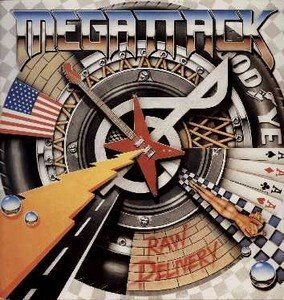
Megattack Raw Delivery 1986

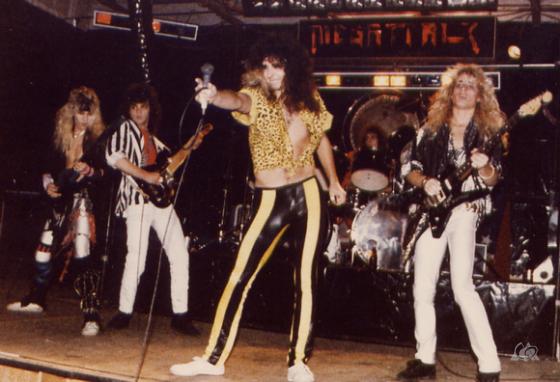
Parrish took guitar seriously and was not up for sharing the stage with somebody he would consider subpar.  Probably, the most successful band that Parrish performed with was Megattack with the dual guitar attack of Parrish Hultquist and Jay Gough. They played regional shows from Salt Lake City to Boise, Idaho with crowds of a 1000 or more. Megattack’s first album Raw Delivery took off in Europe just as the band broke up.

Wolfgang, Parrish,2nd in White pants

Parrish played in numerous projects in the late 80’s, such as Terra’s album Flames of Passion (out of print) featuring brothers Dana and Kevin Freebairn and early 90’s, most notably Wolfgang who played regularly in Salt Lake City and played tour dates opening for bands such as Extreme and Tesla. Wolfgang recorded several unreleased tracks and a few videos that can be found on YouTube nowadays.

Megattack , Raw Delivery era, Bryan Sorenson, Jake Oslo, Rick Jackson, Parrish Hultquist, Patrick Carter, photo courtesy The Bryan Sorenson Family

Megattack , Raw Delivery era, Bryan Sorenson, Jake Oslo, Rick Jackson, Parrish Hultquist, Patrick Carter, photo courtesy The Bryan Sorenson Family

Parrish created a lot of buzz as a guitarist and garnered compliments from other contemporaries such as Michael Schenker and George Lynch. He started to appear on Metal Fanzine covers as the next big thing or the Intermountain Music Scene secret weapon.  It would be a fact that Parrish would not have a problem tangling with any guitarist on stage doing anything from Metal to Jazz to Classical Music. He was an accomplished musician who studied everything he could get his hands on.

Megattack, photo courtesy The Bryan Sorenson Family

Megattack, photo courtesy The Bryan Sorenson Family

Parrish began to have medical issues, a very rare seizure problem in the mid 90’s that began to slow down his ability to perform. He took whatever energy he did have to creating demos off all of his song ideas in his home studio and took opportunities to record with friends.

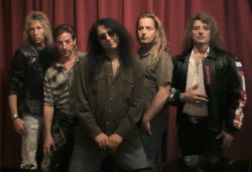
Megattack in 2006, Jay, Richard, Rick, Parrish and Bryan

In 2005, the opportunity came to record with the original Megattack line up and a follow up to Raw Delivery called Save The Nations was recorded. The album was professionally mastered at Airshow in Colorado.  Parrish put as much as he could into his songwriting and playing. He was constantly dealing with seizures although he was grateful to have the opportunity to record again and perform on stage in Salt Lake City. Although medical issues would keep him in Spokane, W A., where his family lived and where he had medical attention, he was grateful to perform saying finally his daughter, Taylor, was able to see him perform with the band that garnered so much success in the 80’s.

One time he was riffing away at a visit to Guitar Center in West Valley later in years when a Salesman was blown away and asked if he had ever heard of Parrish Hultquist, that his Dad use to hang with him and he was considered the best guitarist to ever come out of Salt Lake City.  He finally busted up a little and explained that he was Parrish.

Travis, Shawn and Parrish

If Parrish respected you as a musician or as a person he was a lifelong friend. While he had a hard time with people that were not what he considered real, judgmental or dishonest he was ready to include those that he could tell were on the fringes whether they were shy, handicapped or otherwise feeling left out. He had a sense of humor and a personality that would light up the room or the face of a girl working as a Checker at the Grocery store. If he wanted to engage you in conversation or merriment there was no stopping him.

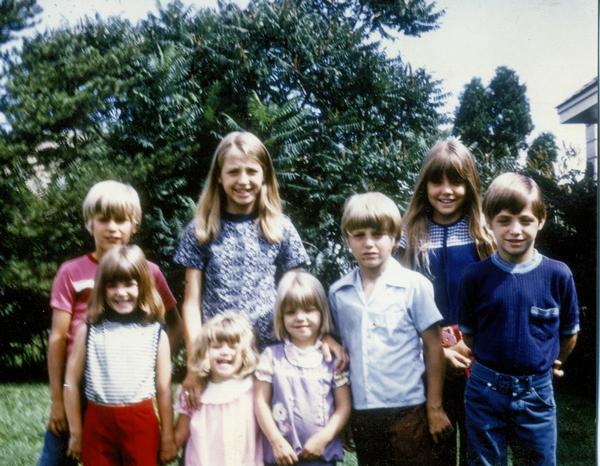
Back row, Parrish, Rome, Shelly, front, Stacy, Tracy, Ronnie, Shawn and Travis

Parrish never made the natural choice to go out to the LA scene in the 80’s. He loved Utah, Idaho and Washington State. He never wanted to be too far from family. He was the oldest brother of eight children.  The last several years with his health problems he was never far from his sisters and his Parents in Spokane, Washington.

Parrish was preceded in death by his younger brother, Shawn Hultquist, who had heart problems and while waiting for a heart donor died in 1998. His mother Gay Lynn Saunders also passed away a few years ago.  The surviving family, his father Ron, Stepmother Jacque, Travis, Rome, Shelly, Stacy, Ronnie, Tracy as well as Cory and Billy are gathering for a Memorial in Spokane, Washington over the next few days. His engaging personality and talent will be sorely missed but warmly remembered.

– Brad Hardisty, Nashville, TN    thenashvillebridge@hotmail.com

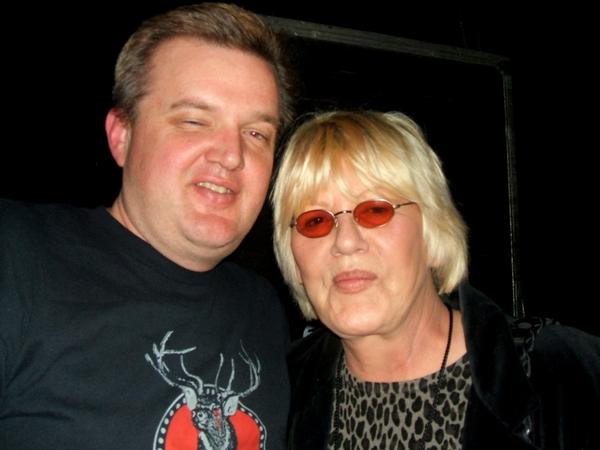
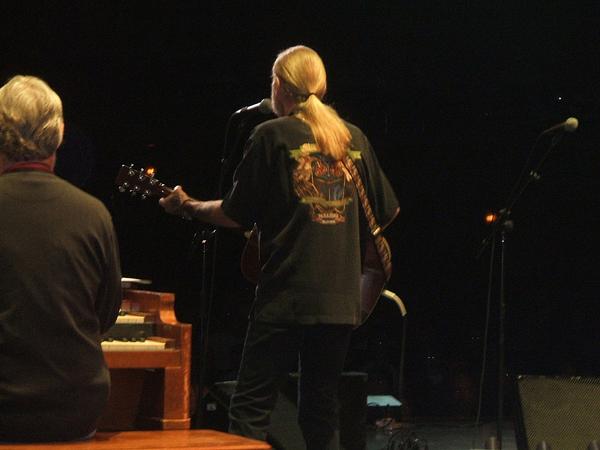
Throwing the CD in brought back my encounter with Gregg Allman in 2007 at the Alabama Theater in Birmingham, listening and watching Bonnie Bramlett sing from the back wall in the black out of view from the audience, “You know I played on her stuff”, Gregg said as he was leaning on my arm to get a little view from the back curtain, I told him, “Hey, Gregg, we can switch places”, “No, I’m fine” and like clockwork, “Well, I gotta get ready” and he disappeared down into the dressing room as if he had her set memorized because ten minutes later she was done and Gregg was on.

Hanging with Bonnie Bramlett, Alabama Theater 2007

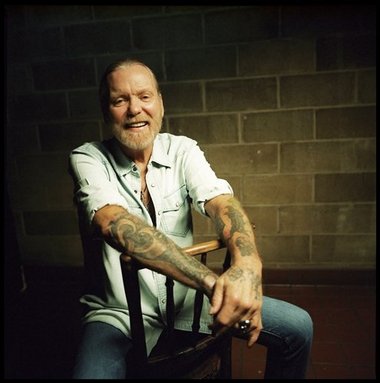
That was the one and only time I hung with him and it felt like hanging with an old friend because history precedes the man.  This was the voice of The Allman Brothers Band at Fillmore East and “Midnight Rider.” Well, what does this all have to do with this new T-Bone “The hardest working producer in show business” Burnett Produced disc have to do with that show?  Mainly because of the off the cuff, off the set list piece that Gregg asked the horn section if they knew, Otis Redding’s “I Can’t Turn You Loose”, which he sang as if he was ready to be Otis.

Gregg at Alabama Theater 2007

Gregg is one of the most soulful voices there is. He doesn’t have to talk to the audience his voice live is mesmerizing with a mix of Southern Blues and Soul that only a few like him can say they are there, namely Joe Cocker, lesser known Eddie Hinton and maybe you haven’t heard of Topper Price but you should.

Low Country Blues is full of covers that feature horn sections, Hammond B3 and some acoustic instruments and shaky handmade sounding percussion things that would be associated with the Americana thing nowadays. The best parts if dissected remind me of that night in Birmingham with the full horn section, organ and a full band turning out Sixties era Memphis Soul on cuts like “Blind Man” by Texan Record label exec, Don D. Robey who managed Clarence “Gatemouth” Brown back in 1949 and had his biggest success with Big Mama Thornton’s #1 hit “Hound Dog” on his Peacock Records.

Indeed from the roster of songs and the depth of history of blues and soul in the tracks I wonder if it was Gregg saying I always wanted to do this or T-Bone digging into his vast treasure chest. They both had a lot of musicology to bring to the table.

Gregg brings a strong self co-penned with Warren Haynes track “Just Another Rider” which is almost an extension of something Otis might have done after “(Sittin’ On) The Dock of The Bay”, with its mix of soul and Lennon/McCartney beat. It was clear Otis was ready to mix it up after Monterey Pop.

Muddy Waters, “I Can’t Be Satisfied” really gets the Americana Acoustic blues treatment that feels more like Hill Country Blues down in the fields of Mississippi then uptown Chicago. This cut should have had Pinetop Perkins on that Piano but you can’t ask for everything. This was only a stone’s throw from 1920’s Memphis Jug Band material.

He really get’s Fifties style B.B. King down on “Please Accept My Love’ with that straight eight Ride and long Sax lines. It really feels like Memphis in the fifties with B.B. King and Fats Domino on the radio and cruising around late at night looking for where the girls are hanging out.

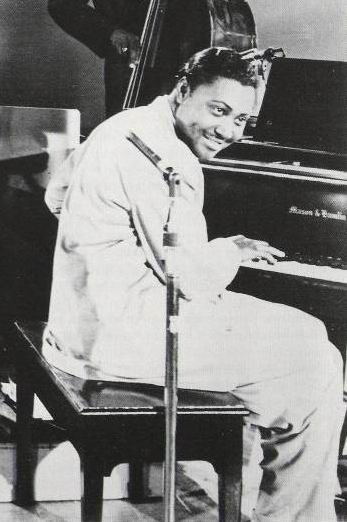
Amos Milburn

Another Texan, Amos Milburn shares the distinction of having a couple of his songs recorded on Rounder Records, many years have passed since George Thorogood recorded “One Bourbon, One Scotch, One Beer” until Gregg took on “Tears, Tears, Tears” which continues a lot of threads that connect the late forties and fifties music on this disc with the theme of many a Blues tune “Tears in my eye, Blue as I can be, Just had another woman to walk out on me.” This is where you are going to hear the distinct Hammond B3 of Gregg, in a nice jazzy post-war blues number.

If that wasn’t enough there is Otis Rush represented “Checking on My Baby” with Doyle Bramhall II featured prominently.  It’s amazing that this album came out of Village Recorders when it sounds like it should have come out of Houston, Memphis or maybe a little Chess Records recording out of Chicago.

One of the best ways to get to the root of the blues is the finisher, “Rolling Stone”, treated with a branch between The Allman Brothers band type rhythm and delivery with some Dobro and other spices such as a great walking bass note on the piano that brings things full circle.

It really captures the roots of Soulful blues which represents what Gregg is made of as he was finding his path early on. There is a great story in the liner notes about Gregg and Duane going to a B.B. King Concert in Nashville when they were young and that was their defining or divine moment when you think of what came after.

Did T-Bone do it right? He has done so many records in the last few years, that obviously not everyone is going to be right, but, he does the legend Gregg Allman in a good way that opens the doors for more stuff. He obviously can lead this into the Americana arena but, the best parts are really the Hammond B3, horn section late Sixties Soul feel. Gregg could do that all day and I would never bet bored. I think this is the CD that will make Eric Clapton search out T-Bone for some Production work. I think Eric will be jealous of this one.

This is a slow simmer, best heard late on a moonlight drive maybe through the southlands of Northern Florida or Southern Georgia; if you can’t be there you can sure feel it. Well done T-Bone! You done Gregg right. I always have in mind what will be my top ten for the end of the year. It is only January and this is one Allman flavored contender.

 – Brad Hardisty, Nashville, TN     thenashvillebridge@hotmail.com

Eddie Hinton,white shirt w/ Wayne Perkins

Before heading down to Helena, Alabama to visit my sister and pickup my Soldano speaker cabinet, I picked up the latest Oxford American Magazine, their annual music issue because it was all about Alabama music not only in written word but featured a CD with 27 tracks, some of them extremely rare all telling different stories from different times and different parts of the state, not just regional but a mix of Blues, Rock, Gospel and even Zappa label material.

I threw in the CD as I headed down 65 towards Birmingham and took the ride through the Birmingham soul of Ralph “Soul” Jackson to Curley Money out of Dothan, Alabama. It was a wonderful ride and I learned things I didn’t even know being in the Birmingham Scene for a few years. I was happy to see the story told about how the Indie Rock Scene started with Jim Bob and The Leisure Suits with drummer, Matt Kimbrell (RIP). I saw his brother, Mark Kimbrell play  in 2007 at a Sunday night Jazz Jam with Chris Fryar (then of The Allman Brothers Band now The Zac Brown Band) at Marty’s in the Five Points area.

 Blues cannot be any rarer than Dan Pickett and Country more honest than Charlie Louvin and they all are here. Well at least for what one can do on a single CD without going to the obvious such as Brother Kane or The Commodores.

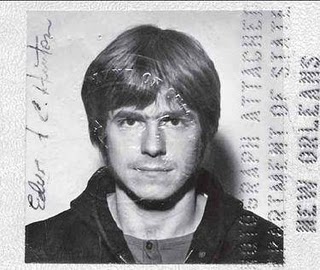
Eddie Hinton ID shot

As the music went on and I read the great essays, I kept asking myself where is Eddie Hinton? Obscure or not, the story of Muscle Shoals or the heart and soul of what is Alabama cannot be told without Tuscaloosa bred Eddie Hinton.  It is possible for somebody looking at Alabama from the outside to miss the mark but if somebody is a serious Muscle Shoals or Alabama music fan or musician you cannot escape learning the story of Eddie Hinton.

“When I first came to Muscle Shoals it didn’t take very long before I became aware of Eddie’s singular talents- as a composer, lyricist and gifted Composer- and was touched by his original, offbeat and engaging personality…When the greatest artists came to Muscle Shoals they would hone in on Eddie – Aretha, Cher, Lulu, Bob Dylan would end up on the back porch of the Jackson Highway Studio with Eddie, pickin’ guitars and communing quietly in the Alabama evening. To this day I still play his records with great enjoyment. He remains unique – a white boy who truly sang and played in the spirit of the great black soul artists he venerated. With Eddie, it wasn’t imitation; it was totally created, with a fire and fury that was as real as Otis Redding’s and Wilson Pickett’s.”- Jerry Wexler, Producer with Atlantic Records.

Where’s Eddie? Can you find him?

I had heard, in reverence, several times about Eddie Hinton. Local Musicians in Birmingham would say “He was the greatest.” The most important revelation was when I talked to the “Swampers”, the Musicians that knew and worked with him at Muscle Shoals Sound.

On April 18th 2007, there was a benefit for Scott Boyer, who was a songwriter and played in Cowboy on Capricorn Records back in the Seventies. I had the opportunity to be part of the stage crew where a Muscle Shoals all star line up with everybody from David Hood, Dan Penn, Spooner Oldham and a cast of characters played with Bonnie Bramlett and Gregg Allman headlining.

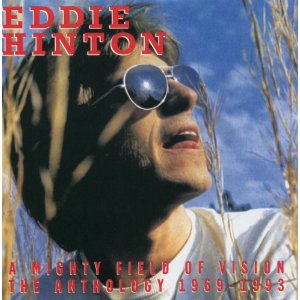
I caught story after story from a time going back thirty plus years. I got into conversations and often asked who the most important player was during the Muscle Shoals era and over and over again the name Eddie Hinton came up. His story is one of triumph, tragedy and post mortem glory. In the last few years his recordings have been gathered from out of print Capricorn Records to rare self released material and put onto a collection of CD’s.  They are not easy to find but one can start with Anthology-1969-1998 A Mighty Field of Vision.

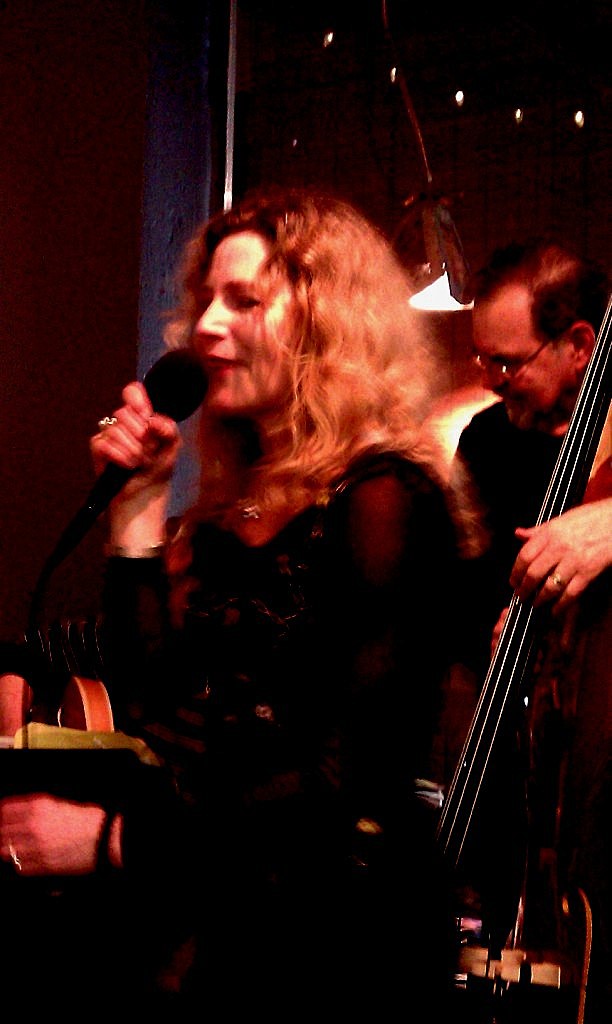
Marian McKay

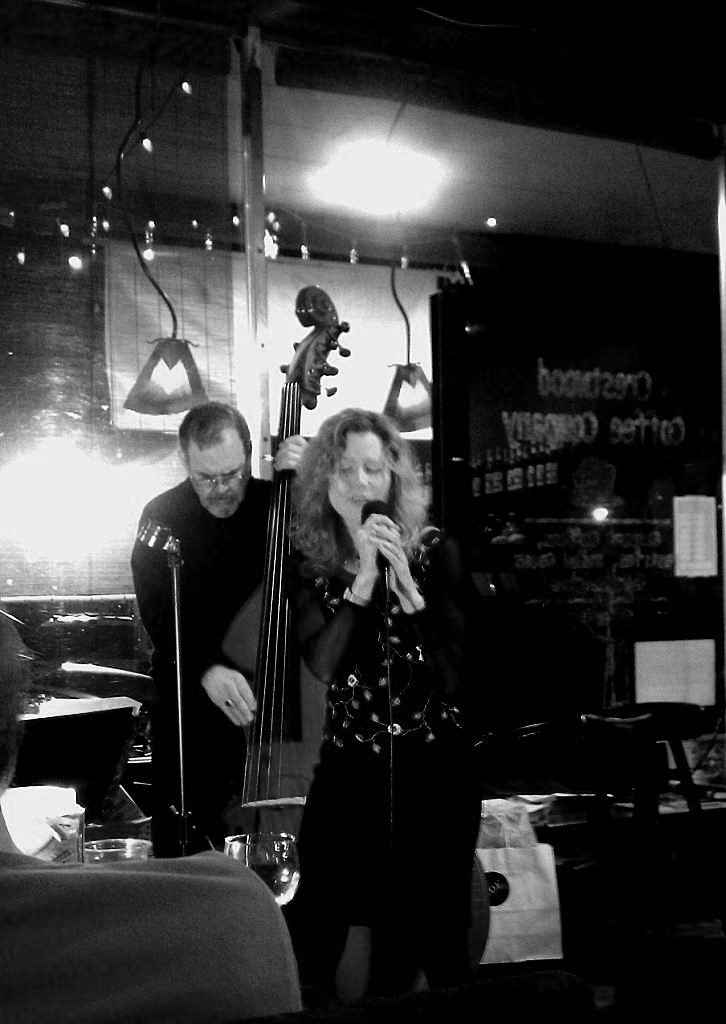
Late last Saturday I went and saw Charlemagne Records’  Marian McKay singing jazz standards at Crestwood Coffee Company with The Mood Swings.  Charlemagne Records is the one of last independent record stores in Birmingham not unlike Grimey’s  it has a long rich history when Marian, her brother  and a best  friend started the shop in 1977 and it has remained at the same location in the Five Points area since then. The shop has lately seen a resurgence as vinyl is becoming increasingly popular among collectors.

We talked about the Alabama issue of Oxford American and how fantastic it was and the people they didn’t forget but when I brought up the fact that Eddie Hinton was not included there was nothing but silence. Eddie was the elephant in the room. Obviously, there were others left out but he was the one who sat in the doorway of Muscle Shoals Sound trading licks and stories, had Duane Allman crashing on his floor when he came to do session work and had style and songs that only fit in Muscle Shoals, where when he ended up moving because of a small marijuana bust in the seventies that forced him to leave town kind of lost his stride and place in the world. He remained an Alabaman to the core even if it meant living in his van in Birmingham in later years before he passed away in 1995.

Eddie with his trusted Tele

There are so many tracks not known by most the world but worthy to wave the Muscle Shoals flag such as “Concept World”, “Sad and Lonesome” or “Heavy Makes You Happy.” It is singular talents such as Eddie Hinton that I discovered while living in Alabama that make me proud that I was a part of that scene for some years.

The State of Alabama has gotten behind this presentation and declared 2011 “The Year of Alabama Music”. I am going to do my part by spotlighting at least one artist a month with roots in Alabama past and present.  I may have been born in California but Alabama is where I met Gregg Allman, Willie King, Tim Boykin, Mark Kimbrell, Chris Fryar, Adam Guthrie, Mandi Rae, Ian, Rick Carter, Kendra Sutton, Topper Price, Rickie Castrillo, Marty, Nathan Whitmore, Rick Kurtz, Rooster, Perch, Billy, Heath Green, David Hood, Kelvin Holly, Jesse Payne and Taylor Hollingsworth.  Alabama, the beautiful, where I got my “Mojo”.

Marian McKay & Her Mood Swings/ Live/ Birmingham,AL 1/8/2011

I may call Tennessee home but my heart is in Alabama.

– Brad Hardisty, Nashville, Tennessee     thenashvillebridge@hotmail.com