Archives for category: Rock Music

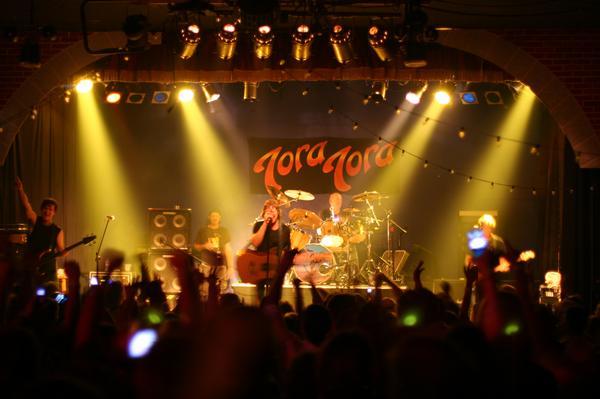
FnA Records will officially release the long anticipated Tora Tora follow up to Wild America; Revolution Day on February 28th on purerockradio.com at 8:30 PM Pacific Time live on the air from Las Vegas, Nevada with DJ Cory Draper playing some of the tracks and celebrating with all the original members of the band; Anthony Corder, Keith Douglas, Patrick Francis and John Patterson.

It has been a while since 1994 when this gem was recorded at Ardent Studios in Memphis, Tennessee just like the previous two albums. Anthony and I sat down for an Indian Lunch buffet at Tamarind on Demonbreum, just off Music Row in Nashville to reflect back on that time.  Tora Tora has been lucky over the last few years doing reunion shows and playing Rocklahoma in 2008.

The release of Revolution Day has been long anticipated since the fans have been getting their first taste of the music from Revolution Day live over the last couple of years. Tora Tora fans, especially in their hometown of Memphis, Tennessee were excited to know that Revolution Day was going to see the light of day.

Brad: Everybody in the band is still nearby?
Anthony: Yeah everybody is still based out of Memphis. We actually ended on great terms when the record deal was done. Our A&R Guy Brian was a great guy, he also signed Soundgarden.

B: So who was your Management then?

A: We were with Loud n Proud which was based out of Brooklyn. L’amour’s was a big heavy metal club and we used to go there and rehearse for a first tour which was our first trip out of town, when we were going to promote our record, it was our first big tour. We would go there and stay out on Staten Island in some Loft apartments, with three of our crew guys; there were seven of us staying there in a one bedroom apartment.  So we’re driving into Brooklyn every day to rehearse at L’amour’s and go by the management office.

B: You were recording at Ardent, right? But, rehearsing in New York?

A: Yeah, we went out for eight weeks after the first record I think. We worked our way on from Pennsylvania, out in the boonies, places like the Cat Club, Vinnie’s,

B: And this was right after the first release?

A: Yeah after Surprise Attack. At the end we were with Bill Graham Management. About the time we were ready to wrap the third record, Brian (A&R) was offered a very lucrative contract to go with another label.

B: How did you get signed?

Tora Tora at Ardent during Wild America

A: Ardent had signed us to a production deal and they kept bringing A&R guys to Memphis to see us and A&M showed the most interest. They seemed the most genuinely interested in what was going on with the band. Brian (Artist Relations with A&M) was always really encouraging; he liked to hang out with us after our thing (in Memphis). We used to have this warehouse where we would showcase.

B: Was that like your practice space?

A: Yeah, we hung black garbage bags all over the wall and the front of the stage. Keith’s Dad had these 55 gallon blue barrels and we built a stage out of them. We put plywood on top of them and painted it. We would just recruit some of the Football players like from Ole Miss and they would run the door for us. They were security and the local DJ would announce us on the radio. He would say, “Hey tonight, don’t forget Tora Tora”. They would bring like long chairs and all kinds of stuff and just hang out and we would jam out all night. That’s where the record label came to see us play.

B: Did you have other bands playing gigs with you there?

A: Our first show was on Halloween and we had an opening act but after that we pretty much did our own thing.

B: Did you do the warehouse thing because there was pretty much one club or you had to open for a big name act?

A: The biggest problem was our crowd was under age so playing bars; they wouldn’t be able to get in. So it was a place, if you were under age where you could go and hang out and listen to lots of music. It was kinda cool. We did play at The New Daisy on Beale Street a lot. It’s like a little thousand seat Theater. We actually just played there in 2009 I think. It was kind of great to go back there and play in a place you grew up.

B: So what was going on around the time you did Revolution Day after a few years on the road?

A: About the time we got finished with recording our last, the third (Revolution Day) record, Keith our guitarist, was getting ready to have a Son, so he was thinking I don’t know if I’m up for doing another run on the road, maybe I’ll do the record, and of course we wanted him to go with us, we just said if you’re not going to go then we’re not going either. You know we had been playing together since we were kids.

B: So he didn’t think he would be able to do it?

A: Well, he just had a child that he wanted to be around. It was a big decision and at the time the other three of us weren’t married. Not to bring up anything negative, but it seemed like the timing was right to take a break, Brian (at A&M) was going and Keith was wanting to take some time off, so we were like you know what let’s just take a break and we’ll pick up where we left off or if we want to get back together we will.

B: So you kind of took a hiatus?

A: Yeah, and so we decided to do that and it took us I don’t know how long, fourteen years or something like that to get back. Everybody got back into their own life and had their things going on. I wanted to keep singing and I kept pounding it out with some other guys.

B: Were any of the guys playing in any bands or doing anything after Tora Tora?

A: Patrick actually did, he went on and did a thing with a band called Rail.

B: Was it the Rail that was on MTV and stuff back in the early eighties that won some contest and toured with Heart?

A: I don’t think so. Oh no.

B: When you started Tora Tora and got signed did you ever find out there were any other bands called Tora Tora?

A: We did, from the seventies I think.

B: Were they a U.S. Band?

A: Yeah, they were and they had a record called Made in Japan. It was funny.  I guess with the length of time and everything since their release we got permission and everything to get the rights to the name and go for it.

B: Nowadays with the internet, it is a lot easier to find out, but back then you would have to look through a library or for trademarks or something. Back then you wouldn’t know there was another band with your name unless you crossed regions. With a name like Tora Tora there was that possibility.

A: Right, we kind of found out on the back end, but it was enough time before we got the record deal and everything going.

B: When you were writing the music for Revolution Day there is a marked confidence in the playing.

A: We had grown so much out on the road. I mean on our first record we had never travelled. We didn’t have a lot of life experience. We just thought about dating girls, maybe catching a buzz or something. It was pretty limited but after our first record we spent two years out on the road and you could tell our eyes were just like opening.

B: Who were you touring with at the time?

A: We did a lot of touring on our own. We were brand new. We wanted to get out and get the chops, get our own crowd. It was about being in front of people, you know you can rehearse to death in a rehearsal room and hit every mark and great but when you play in front of people it turns into its own thing.

B: Now kids want to get in and do all these recordings and videos but what Rock and Roll is all about is going out and joining the circus.

A: Yeah we took three guys as our crew and went out and our A&R guy was there.

B: Did your A&R guy do merch for you?

A: No, He just wanted to go out with us on the road. It was great fun. I don’t know how other people work but he was pretty hands on.

B: That is really good though.

A: Yeah even Keith our guitar player got kind of close would hang with him. He would come up with all kinds of crazy stuff. One of my Birthdays, we were on our way to North Carolina or whatever and he would get ideas to go do stuff. There is nothing like being in a band together and just going out and doing stuff you like to do. We were getting so much better out on the road.

B: Well, when you think of the trilogy of Tora Tora albums it makes me think about Van Halen, on Van Halen it was just killer, and then when you get to Van Halen II, hey they have been out on the road, there just kind of more loose, relaxed and then Van Halen III it was like they thought we can do some crazy stuff, like with the drum beats and where they were going. It was kind of like Tora Tora was getting there, like now we can try some crazy stuff.

A: Yeah, we always rehearsed a lot so that when we got to the studio there were never any snares. Keith was always the perfectionist.  You know how it is, he was always creative. We were growing musically, but on that third record practiced a lot at an old studio around the corner from Ardent. We actually had done a lot of pre-production there for the Wild America record as well.

B: Are the first two A&M records still in print?

A: The first one (Surprise Attack) is, the second one is not. I think they only made about 300,000 units or something.

B: So what about Revolution Day?

A: I think we did stretch out musically.  We had a warehouse that was over by the airport and it was great we could get as loud as we want and there were planes like taking off. This was during the third record.

B: Did you know Rock City Angels when they were recording over at Ardent?

A: Yeah we knew them very well. I remember Bobby Durango and all those guys. Anyways, when we were at the warehouse, one of our crew guys had worked at Ardent and he was a great like Engineer guy and he could fix like anything in the world and he helped us mic up everything and did preproduction demos on 8 track cassette. That was some of the stuff we released on FnA Records.

B: Yeah some people are so into deep catalog stuff they are looking for stuff like that.

A: Yeah, I told FnA Records that was great even for us to have just to document that time.  We worked on that record for a long time and there are songs like “Little Texas” which is about this place in Mississippi where they are still toting stuff around it’s a farm area, a town called Little Texas, Mississippi. Lyrically it had stuff about my roots, more introspective.

B: So “Little Texas” is about where you grew up?

A: Yeah, a little bit. I mean the real place I’m from is called Avalon, Mississippi. It’s where Mississippi John Hurt is from, and you know cotton gins and little stores,

B: You know talking about Mississippi John Hurt; that was one of the blues players they went back to in the sixties like Son House.

A: My Granddad knew him. When I grew up, my family on my Mom’s side, they were all like porch players and my Mom played piano and my Uncle played guitar. The other Aunt sang.

B: Porch players? Like hanging out on the porch and jamming?

A: Yeah, porch pickers, they would all play and they got my Uncle to learn the John Hurt way of playing. So he would do it and play just like him. My Aunt could do it. I don’t realize it was something unique growing up there with my family jamming and stuff. My friends would come down with me to visit and they would be like, your family is playing this Mississippi John Hurt style and I would be like, no, let’s get out of here. I would never sing in front of my family. When I was about fifteen, a guy down the street from me was playing guitar and I’ll never forget, he got a Jackson, like he was all about it, it was pink and the slanted neck and all that. He got it and he was listening to a bunch of Dokken and all these things and I went down and he said you should sing or something. At first he got a snare, bass drum and a High hat and I was jamming with him and I was yelling over the drums. That is when I very first started singing.

B: Before that did you sing in the shower or anything like that?

A: No, I listened to a lot of top 40 radio and my parents listened to a lot of R&B and the bluesy stuff and they did Gospel. It was really important, because they were like strict Southern Baptist and we were at church every Sunday singing in church and stuff like that. It was definitely something different when I started singing with them and we started this group called Pioneer.

B: That was your first band?

A: We had done a couple of talent shows and a couple of Battle of the Bands things and then Patrick the bass player from Tora Tora talked to me one day. We saw each other at the Mall or something.

B: This was how Tora Tora started?
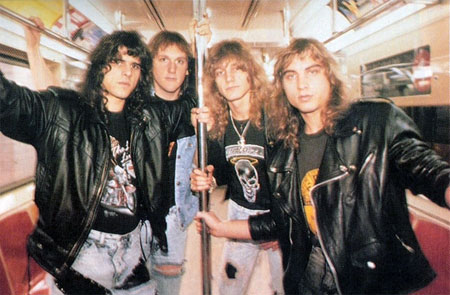
A: Yeah, he said we are going to have some auditions for the band and we wanted to know if you wanted to come by and sing. They were like into Iron Maiden and Rush, things I weren’t super clear with, and I knew some of the stuff.

B: You brought kind of the blues thing into it, kind of like they were these Metalheads?

A: Yeah, it wasn’t something like hey this is what we are going to do. It just kind of developed. They were playing like Cheap Trick, Rush 2112 and Iron Maiden.

B: This is a lot different than “Guilty”.

A: They had a following before I came in but it was more heavy kind of a Judas Priest thing. It turned into something a little bit different. After the first couple of times practicing it started changing and they were really teaching me a lot of things because I really didn’t know much about singing. I mean like timing and all that stuff. It was hilarious. I remember our first show we played out, like I didn’t move.  I stared at my feet. And they said you gotta move man. I wouldn’t trade it for anything. I think about every day. I mean I can walk by somewhere and smell the room and say I want to get up there right now or something will happen. The third record though,

B: What would you say would be the radio cut on the new album?

A: I don’t know, we had a lot of fun where we had girls singing back up and we had the Memphis Horns on one track (Memphis Soul). We had written with some more outside writers like Stan Lynch from Tom Petty and The Heartbreakers.

B: Really, Stan Lynch?

 A: He had two songs on the second record, and I think he had two on the third record. I still talk to him this day. He had a great stand here in Nashville. On the first record we were against writing with other people, but then we co wrote “Guilty” and that was like pulling teeth. None of us wanted to go in there. We felt like they were trying to change us. We thought well we need to man up so I went in there and wrote with him. We thought this is totally going to change our sound and the label is going to hate it and the label people went “Oh my God, this is great! We got a single!” It was a learning experience and the one thing I am happy about now, looking back on it, especially being in publishing now, I encourage people to write with as many people as they can. You always take something out of it even if the song is not that great.

B: There is nothing wrong with mixing it up.

A: I think Keith tried a lot of different things on the guitar; he tried a lot of different tones and sounds in the studio. We had the luxury when we were at A&M, all six years, with recording everything at Ardent.  It was kind of our home base. John Fry is still a great mentor to me.

B: John Fry is still the “guru” at Ardent today.

A: Yeah, and they gave us the opportunity to like grow and be experimental. I bet we wrote sixty songs for Revolution Day. That was actually demo’d up.

B: Pre-production was a big thing back then. You could demo thirty songs and pick twelve or thirteen.

A: I think the culture is totally different now. Economics.  Money is not flowing around like it used to be.  Technology affords you the opportunity to just trigger it. The overall thing about Revolution Day that I just wanted to say is get it out to the people that want to have the chance to hear it.

B: The songs from Revolution Day always go over really well. I was at your 2008 show.  The fans like it, people want a copy of it.

A: It’s out all over the internet (poor MP3 quality bootlegs). We just said, let’s do a copy right. I’m surprised fans are still out there and they’re still loyal. They appreciate everything we do. I think about it every day.

B: I talk to a lot a people from bands from back in the day and I mention Tora Tora, being from Memphis and the album Revolution Day and I always get positive feedback. It’s always, I really liked those guys.

A: I think a lot of it is due to the team we had around us at Ardent. The band, the guys, they really had a sound. We would go bang it out in the studio till we had the right sound.

B: So with Revolution Day, maybe you’ll do some more shows?

A: Well, Keith has been writing some stuff and said “I want to send some stuff over to you, not bang you in the head, maybe acoustic stuff at first. Which is good, I was always the mellow guy. I would love to do something again other than just do shows.

After a pile of Tandori Chicken, Curry and Rice we were done and where we were going was into the future. It is possible that Tora Tora may have some new material in the future with the same four members that tore it up back when, but, for now Revolution Day is a fantastic album equal sonically to some of the best Metal of the era like Motley Crue’s Doctor Feelgood for Metalheads past and present to enjoy.

Tora Tora present times

– Brad Hardisty, Nashville, TN     thenashvillebridge@hotmail.com

Tristan Dunn, Nashville, TN

From the very first time Tristan Dunn played at Sharky’s, a memorial night for Topper Price [ the famed Gravel voiced Birmingham native that  could blow Blues Harp like nobody business], Tristan realized that he was not only stepping out in the late night Alabama air, but that it was time to start to realize his ambitions to play Southern Rock, with his early roots in the family favorite traditional Country, Tristan wanted to play Southern rock, the road travelled by Lynyrd Skynyrd, Charlie Daniels, The Allman Brothers Band, The Marshall Tucker Band and Molly Hatchet.

“My Great Grandmother’s favorite was Hank Williams Sr., but, when I was Fifteen I picked up on an album called Skynyrd Friends where different Country Artists were playing Lynyrd Skynyrd songs. Alabama played “Sweet Home Alabama” and I started learning Southern Rock on the Squire Telecaster my parents got me when I was thirteen. Fifteen was the year when I decided this is what I wanted to do.”

Tristan with Rollin Roger

Tristan has a strong voice that can carry a Merle Haggard tune just as strong as Merle himself.  Even more than the voice, Tristan went from guitar to learning the fiddle when he wanted to master Charlie Daniel’s “ South’s Gonna Do It Again”. The song has become a showstopper for his band, Rollin Roger who play regularly in Alabama playing all things Classic Southern Rock.

“South was the first song of the second set when we were playing a show at The Central Club, one of our favorite venues in Leeds, Alabama, and there were these three College age Guys. I realized if I could do something to remember us we could get some Frat gigs. I was laid out on the table wailing away when one of the guys started pouring Beer into my mouth and I knew we had a hit then.”

Rollin Roger started in 2006 with Forrest, Roger the Soundman and Mike the drummer who had played in several bands over the years.

“I was checking want ads at Bailey Brothers down in the Southside (Birmingham) in November 2006. We were on the same musical page but it took us until 2008 to get the right people in the band.”

Tristan was born in 1984, he jokes,”…and the world went to hell the next day”.  Tristan was diagnosed with a form of Autism known as Pervasive Developmental Disorder. “It shows up when you’re younger but as you get older you learn how to communicate better. A lot of the Obsessive Compulsive tendencies go away as I get older. The hardest thing growing up was dealing with kids my own age.  I moved to Vestavia, (A Birmingham suburb) when I was eight years old from Hueytown. Vestavia kids were such that if you were different in any sort of way you were an outcast, got picked on, and exploited, that sort of stuff. I used to come home crying just about every day when I was young.”

Tristan with The Purple Fiddle

Tristan was asked by the Alabama Interagency Autism Coordinating Council to be a Consultant. He regularly travels down to Montgomery representing as a Functioning Adult with ASD to give input on whatever programs they plan to put into effect for the State of Alabama.

Music helped Tristan deal with his differences and gave somewhere to focus the anger and negative energy and turn it into something good. “I did a show called “Vestapalooza” in 10th grade. There were bands and I was the only solo act playing Fiddle, Guitar and Singing. “

In the last couple of years Tristan has become a “go to” Harmonica man and has sit in with several Birmingham artists such as Todd Simpson & Mojo Child, Adam Guthrie, Chris Porter and Stuart McNair. In a way he has picked up where Topper Price left off but doing it his own way.

Tristan has also been on stage in Nashville with Tyler Dickerson at Tootsie’s and Jake Bowry at The Broken Wagon Wheel. “Garth Brooks’ Harmonica man, Terry McMillan was the most sought after Harmonica player in Nashville and he played on “Aint Goin’ Down Till The Sun Comes Up”.” Whenever he heads out into the night, he wears a custom fitted shirt with three or four harmonicas ready to join in on the Blues, Country and Rock and Roll. Tristan feels “In Color” by Jamey Johnson should have had his Harp playing on it.

In the last couple of years Tristan has been an extra in a couple of Indie films, October Baby with John Schneider was a lot of fun being a fan of The Dukes of Hazard, also “Company M Mob of Soldiers” where he was featured in three scenes as well as playing a juror. “I was kind of found by ACT (Americas Choice Talent) Models and Talent Rep. Sativa “Andy” Banks.  Andy has been a big supporter of Tristan who he said originally pointed out his hair and thought he would be great for hair care product promotions.

One of Tristan’s favorite hobbies is getting involved in Civil War re-enactments. “When I am running around in a color guard I forget I am in 2011 and begin to think I am in a combat zone in 1861. When I  put on my clothes I am a whole other person. I feel like I am in an actual battle and could actually be killed and it makes my body react better on a subconscious level.” Tristan was told this was a mark of a true professional and he feels it has helped him with his acting.

Tristan can be found in and around Birmingham with Rollin’ Roger or sitting in at Metro Bistro and other venues as he develops his playing and writing with an eye towards the future.

Tristan, Birmingham, Alabama 2007

– Brad Hardisty, Nashville, Tennessee     thenashvillebridge@hotmail.com

Photo – Brad Hood

When Parrish Hultquist started playing out at age 15, Utah had no idea what they were in store for.

After first tracking at Bonneville Studios for a band called Equinox, he developed his songwriting with Adrian Scott and Brad Hardisty in Roxx. Within a few short years, he was out performing originals with Moviescreen who released their first album in 1984.

Moviescreen

By the time Moviescreen started playing at The Generation Gap, Parrish’s lightning speed and interesting chord changes set him apart from what was available at the time in Utah. Parrish was learning from just about every imaginable influence from early Ritchie Blackmore, Eddie Van Halen, Randy Rhoads to even Jazz artists like Al Di Meola and Allan Holdsworth. If he heard it, he could play it.

Wolfgang at Rafters-photo-Brad Hood

During the early 80’s he challenged himself to study classical nylon guitar only to find out that his teacher from the University of Utah had taught him everything he knew in six months. Anything that he would challenge himself to do on the guitar he could accomplish. He was a guitarists’ guitarist.

Parrish excelled in his abilities and quickly became bored or disinterested if the band he was in was not up to pushing as fast as things should be, reached a plateau or could not see his vision. Most of the time Parrish was the only guitarist in the band, but, those that were fortunate enough to share the stage with him found it to be an exhilarating experience.

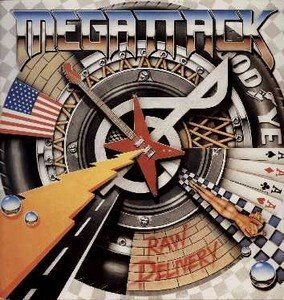
Megattack Raw Delivery 1986

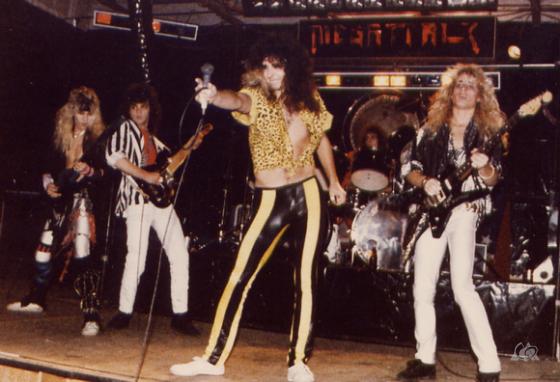
Parrish took guitar seriously and was not up for sharing the stage with somebody he would consider subpar.  Probably, the most successful band that Parrish performed with was Megattack with the dual guitar attack of Parrish Hultquist and Jay Gough. They played regional shows from Salt Lake City to Boise, Idaho with crowds of a 1000 or more. Megattack’s first album Raw Delivery took off in Europe just as the band broke up.

Wolfgang, Parrish,2nd in White pants

Parrish played in numerous projects in the late 80’s, such as Terra’s album Flames of Passion (out of print) featuring brothers Dana and Kevin Freebairn and early 90’s, most notably Wolfgang who played regularly in Salt Lake City and played tour dates opening for bands such as Extreme and Tesla. Wolfgang recorded several unreleased tracks and a few videos that can be found on YouTube nowadays.

Megattack , Raw Delivery era, Bryan Sorenson, Jake Oslo, Rick Jackson, Parrish Hultquist, Patrick Carter, photo courtesy The Bryan Sorenson Family

Megattack , Raw Delivery era, Bryan Sorenson, Jake Oslo, Rick Jackson, Parrish Hultquist, Patrick Carter, photo courtesy The Bryan Sorenson Family

Parrish created a lot of buzz as a guitarist and garnered compliments from other contemporaries such as Michael Schenker and George Lynch. He started to appear on Metal Fanzine covers as the next big thing or the Intermountain Music Scene secret weapon.  It would be a fact that Parrish would not have a problem tangling with any guitarist on stage doing anything from Metal to Jazz to Classical Music. He was an accomplished musician who studied everything he could get his hands on.

Megattack, photo courtesy The Bryan Sorenson Family

Megattack, photo courtesy The Bryan Sorenson Family

Parrish began to have medical issues, a very rare seizure problem in the mid 90’s that began to slow down his ability to perform. He took whatever energy he did have to creating demos off all of his song ideas in his home studio and took opportunities to record with friends.

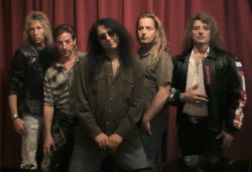
Megattack in 2006, Jay, Richard, Rick, Parrish and Bryan

In 2005, the opportunity came to record with the original Megattack line up and a follow up to Raw Delivery called Save The Nations was recorded. The album was professionally mastered at Airshow in Colorado.  Parrish put as much as he could into his songwriting and playing. He was constantly dealing with seizures although he was grateful to have the opportunity to record again and perform on stage in Salt Lake City. Although medical issues would keep him in Spokane, W A., where his family lived and where he had medical attention, he was grateful to perform saying finally his daughter, Taylor, was able to see him perform with the band that garnered so much success in the 80’s.

One time he was riffing away at a visit to Guitar Center in West Valley later in years when a Salesman was blown away and asked if he had ever heard of Parrish Hultquist, that his Dad use to hang with him and he was considered the best guitarist to ever come out of Salt Lake City.  He finally busted up a little and explained that he was Parrish.

Travis, Shawn and Parrish

If Parrish respected you as a musician or as a person he was a lifelong friend. While he had a hard time with people that were not what he considered real, judgmental or dishonest he was ready to include those that he could tell were on the fringes whether they were shy, handicapped or otherwise feeling left out. He had a sense of humor and a personality that would light up the room or the face of a girl working as a Checker at the Grocery store. If he wanted to engage you in conversation or merriment there was no stopping him.

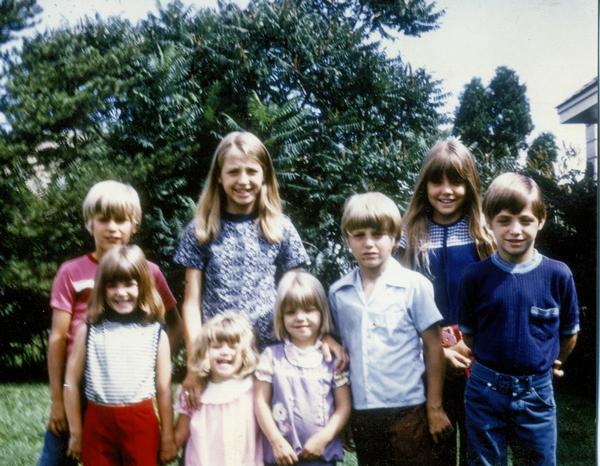
Back row, Parrish, Rome, Shelly, front, Stacy, Tracy, Ronnie, Shawn and Travis

Parrish never made the natural choice to go out to the LA scene in the 80’s. He loved Utah, Idaho and Washington State. He never wanted to be too far from family. He was the oldest brother of eight children.  The last several years with his health problems he was never far from his sisters and his Parents in Spokane, Washington.

Parrish was preceded in death by his younger brother, Shawn Hultquist, who had heart problems and while waiting for a heart donor died in 1998. His mother Gay Lynn Saunders also passed away a few years ago.  The surviving family, his father Ron, Stepmother Jacque, Travis, Rome, Shelly, Stacy, Ronnie, Tracy as well as Cory and Billy are gathering for a Memorial in Spokane, Washington over the next few days. His engaging personality and talent will be sorely missed but warmly remembered.

– Brad Hardisty, Nashville, TN    thenashvillebridge@hotmail.com
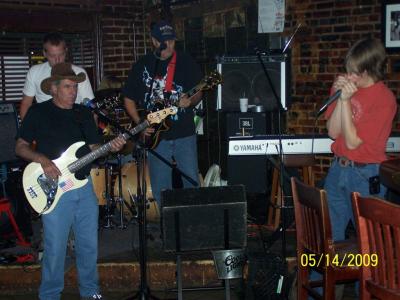
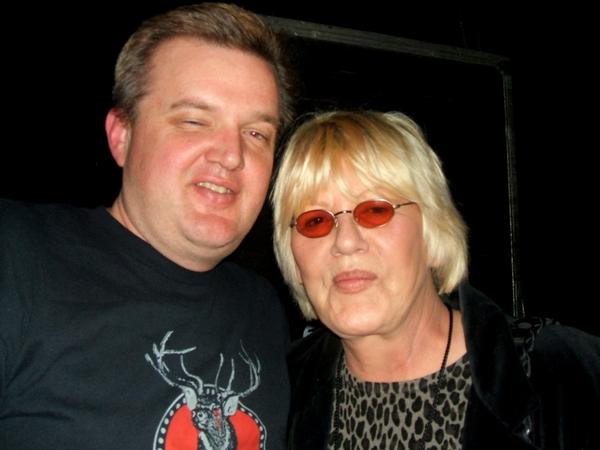
Throwing the CD in brought back my encounter with Gregg Allman in 2007 at the Alabama Theater in Birmingham, listening and watching Bonnie Bramlett sing from the back wall in the black out of view from the audience, “You know I played on her stuff”, Gregg said as he was leaning on my arm to get a little view from the back curtain, I told him, “Hey, Gregg, we can switch places”, “No, I’m fine” and like clockwork, “Well, I gotta get ready” and he disappeared down into the dressing room as if he had her set memorized because ten minutes later she was done and Gregg was on.

Hanging with Bonnie Bramlett, Alabama Theater 2007

That was the one and only time I hung with him and it felt like hanging with an old friend because history precedes the man.  This was the voice of The Allman Brothers Band at Fillmore East and “Midnight Rider.” Well, what does this all have to do with this new T-Bone “The hardest working producer in show business” Burnett Produced disc have to do with that show?  Mainly because of the off the cuff, off the set list piece that Gregg asked the horn section if they knew, Otis Redding’s “I Can’t Turn You Loose”, which he sang as if he was ready to be Otis.

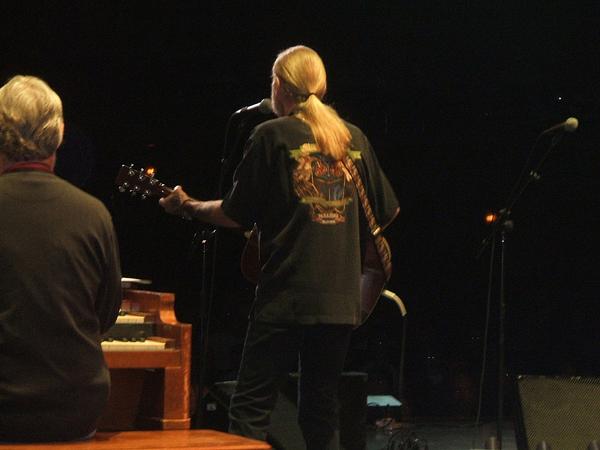
Gregg at Alabama Theater 2007

Gregg is one of the most soulful voices there is. He doesn’t have to talk to the audience his voice live is mesmerizing with a mix of Southern Blues and Soul that only a few like him can say they are there, namely Joe Cocker, lesser known Eddie Hinton and maybe you haven’t heard of Topper Price but you should.

Low Country Blues is full of covers that feature horn sections, Hammond B3 and some acoustic instruments and shaky handmade sounding percussion things that would be associated with the Americana thing nowadays. The best parts if dissected remind me of that night in Birmingham with the full horn section, organ and a full band turning out Sixties era Memphis Soul on cuts like “Blind Man” by Texan Record label exec, Don D. Robey who managed Clarence “Gatemouth” Brown back in 1949 and had his biggest success with Big Mama Thornton’s #1 hit “Hound Dog” on his Peacock Records.

Indeed from the roster of songs and the depth of history of blues and soul in the tracks I wonder if it was Gregg saying I always wanted to do this or T-Bone digging into his vast treasure chest. They both had a lot of musicology to bring to the table.

Gregg brings a strong self co-penned with Warren Haynes track “Just Another Rider” which is almost an extension of something Otis might have done after “(Sittin’ On) The Dock of The Bay”, with its mix of soul and Lennon/McCartney beat. It was clear Otis was ready to mix it up after Monterey Pop.

Muddy Waters, “I Can’t Be Satisfied” really gets the Americana Acoustic blues treatment that feels more like Hill Country Blues down in the fields of Mississippi then uptown Chicago. This cut should have had Pinetop Perkins on that Piano but you can’t ask for everything. This was only a stone’s throw from 1920’s Memphis Jug Band material.

He really get’s Fifties style B.B. King down on “Please Accept My Love’ with that straight eight Ride and long Sax lines. It really feels like Memphis in the fifties with B.B. King and Fats Domino on the radio and cruising around late at night looking for where the girls are hanging out.

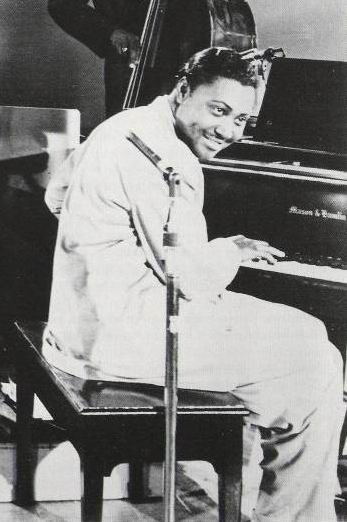
Amos Milburn

Another Texan, Amos Milburn shares the distinction of having a couple of his songs recorded on Rounder Records, many years have passed since George Thorogood recorded “One Bourbon, One Scotch, One Beer” until Gregg took on “Tears, Tears, Tears” which continues a lot of threads that connect the late forties and fifties music on this disc with the theme of many a Blues tune “Tears in my eye, Blue as I can be, Just had another woman to walk out on me.” This is where you are going to hear the distinct Hammond B3 of Gregg, in a nice jazzy post-war blues number.

If that wasn’t enough there is Otis Rush represented “Checking on My Baby” with Doyle Bramhall II featured prominently.  It’s amazing that this album came out of Village Recorders when it sounds like it should have come out of Houston, Memphis or maybe a little Chess Records recording out of Chicago.

One of the best ways to get to the root of the blues is the finisher, “Rolling Stone”, treated with a branch between The Allman Brothers band type rhythm and delivery with some Dobro and other spices such as a great walking bass note on the piano that brings things full circle.

It really captures the roots of Soulful blues which represents what Gregg is made of as he was finding his path early on. There is a great story in the liner notes about Gregg and Duane going to a B.B. King Concert in Nashville when they were young and that was their defining or divine moment when you think of what came after.

Did T-Bone do it right? He has done so many records in the last few years, that obviously not everyone is going to be right, but, he does the legend Gregg Allman in a good way that opens the doors for more stuff. He obviously can lead this into the Americana arena but, the best parts are really the Hammond B3, horn section late Sixties Soul feel. Gregg could do that all day and I would never bet bored. I think this is the CD that will make Eric Clapton search out T-Bone for some Production work. I think Eric will be jealous of this one.

This is a slow simmer, best heard late on a moonlight drive maybe through the southlands of Northern Florida or Southern Georgia; if you can’t be there you can sure feel it. Well done T-Bone! You done Gregg right. I always have in mind what will be my top ten for the end of the year. It is only January and this is one Allman flavored contender.

 – Brad Hardisty, Nashville, TN     thenashvillebridge@hotmail.com
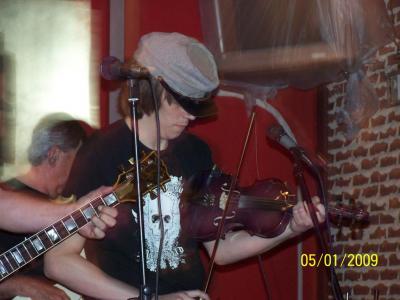
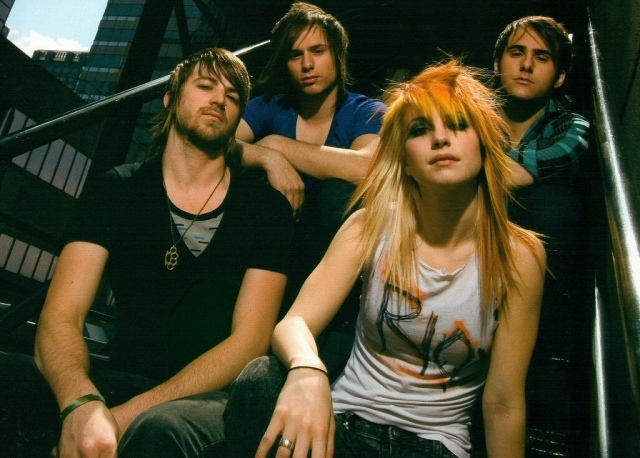
Josh and Zac Farro’s recent departure appears to be from the fact that in reality Paramore was a solo gig appearing as a band. Josh and Zac went along for the ride as long as they felt a part of the band by writing and had some decision making.

What appeared to be an indie band pressing up through the ranks on small label Fueled by Ramen was actually a Trojan horse of major label Atlantic to be part of the South by Southwest crowd.  Does this really surprise anybody? Although they may have not sounded like No Doubt, the packaging was clear especially when they had the opening slot for No Doubt on their reunion tour not too long ago.

Puddle of Mudd

This is not the first time an artist has been released as a “band” another good example is Wes Scantlin whose Kansas City band Puddle of Mudd had broke up, was able to get his demos in front of Fred Durst who was interested and helped him put together a new Puddle of Mudd that was touted as being from Kansas City when in fact only Wes was the only original member from Kansas City. The rest of the band were people that Wes met out in California or Fred wanted in the “band”.

Kurt Cobain

One of the most interesting notes in a label trying to attain street cred was the signing of Nirvana. David Geffen wanted to sign them to Geffen Records home of Guns & Roses. Nirvana had been with Sub Pop and was weary of the big label machine with the importance of being accepted by the alternative rock community. So, David Geffen started a new record company called DGC Records.  It is fairly obvious what the initials stand for.

The Runaways & Kim Fowley

One of the biggest disputes of whether or not we have a real band here was between Kim Fowley and The Runaways. While it is true Kim Fowley helped Joan Jett put together an all girl rock band with his contacts that reached far and wide across Southern California, The Runaways did in fact write and perform their own music. There is no way to dispute that Kim may have been only a handful of people that could have helped put that group together and encourage them as raw teenage talent they were in fact a great band writing and performing their own music.

It would be great if all band stories were not either marketed or put together on purpose, but as one can see music is a business and many times the business machine is involved in the creative process. It looks like Paramore was in a development deal similar to a country act that may take a couple of years before the business machine drops the record on the public.

Paramore’s roots are actually still a lot more organic than most.  Josh and Zac did have Hayley in their garage band. Hayley did reach out to them when she wanted to put together a full band. They helped to come up with the name of the band. She also stuck up for them when label execs started flexing their “whose in the band” muscle.  They were involved in the writing process. In the end, although she may have been the one signing the deal with Atlantic, they were more of a band then the current Guns & Roses which really is an Axl Rose solo project under a band moniker.

Paramore has a lot of fans because after all it is about the music. Sometimes the way into the music business is not always from the garage to the road to success. There can be other people involved. Paramore is not quite the same story as Puddle of Mudd; they are still a band from Franklin, Tennessee now with two less members from Franklin, Tennessee.  For Josh, it must be a little weird to leave the band with a name you came up with.

– Brad Hardisty, Nashville, TN     thenashvillebridge@hotmail.com

A year in Exile

If there was any kind of recurrent theme this year, The Rolling Stones kept popping up on the radar. It started when I bought the Deadstring Brothers album Sao Paulo an obvious well done Stones influenced work of art. It would be in my Top Ten if it had come out in 2010 but it actually was released in 2009. It is a great album and when I saw them live at The Basement it came across really well.

It didn’t stop there; Exile on Main Street had been remastered with bonus tracks where The Stones actually brought in Mick Taylor to play his parts on some unfinished tracks. The Rolling Stones released a new single “Plundered My Soul” from the found tracks and released several versions of the album.

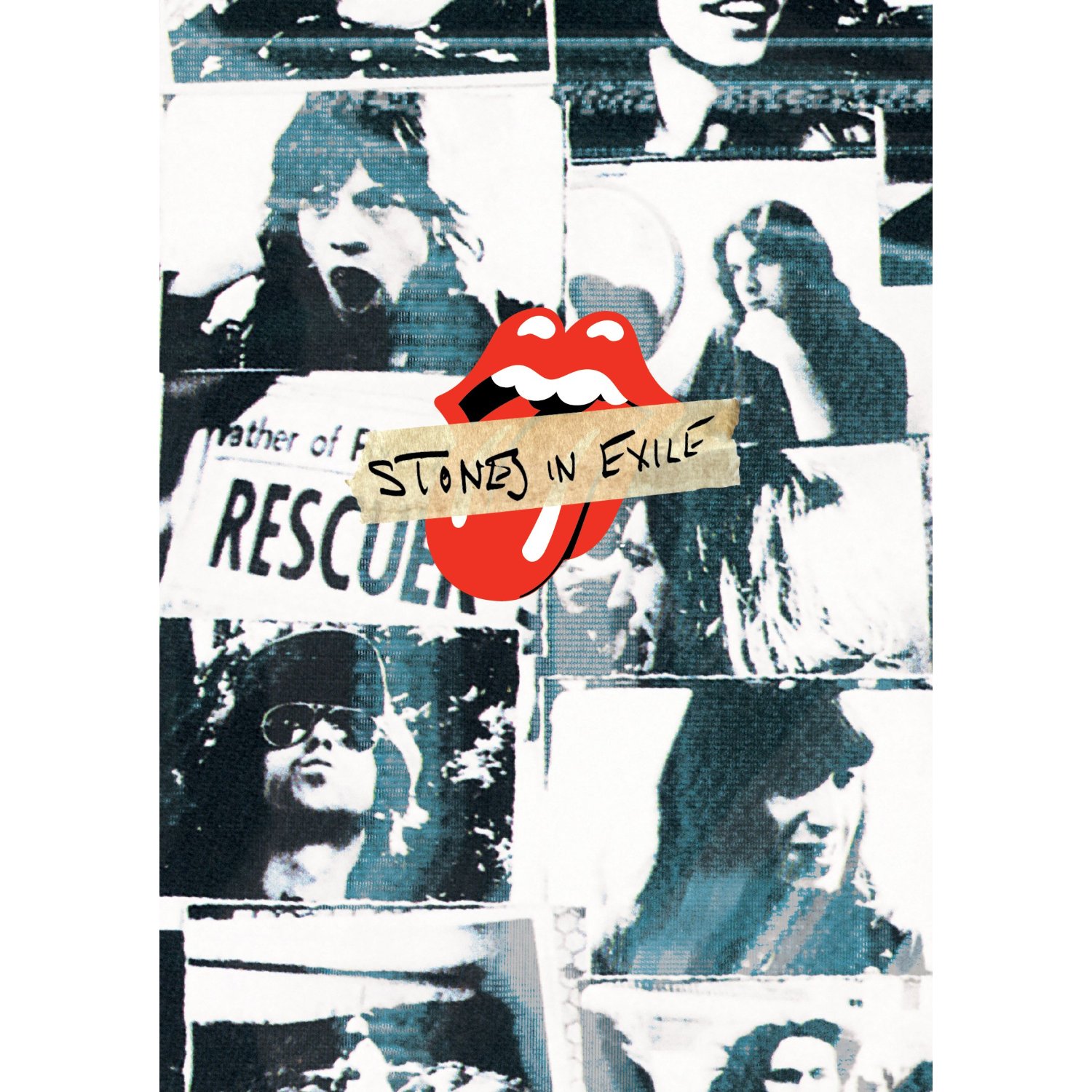
Grimey’s did a midnight screening of the Documentary Stones in Exile that took photographs, film, new interviews with the band as well as Bobby Keyes and others about recording Exile on Main Street in the south of France way back when at The Belcourt Theatre. “Exile” is now considered a pivotal record but at the time “Tumbling Dice” was considered a difficult single on a rather un-commercial record.

During the Americana Conference the Long Players augmented with Stones Sax Player Bobby Keyes, Dan Baird and several singers like Mike Farris, Grace Potter and others did the entire album live at The Cannery Ballroom. 

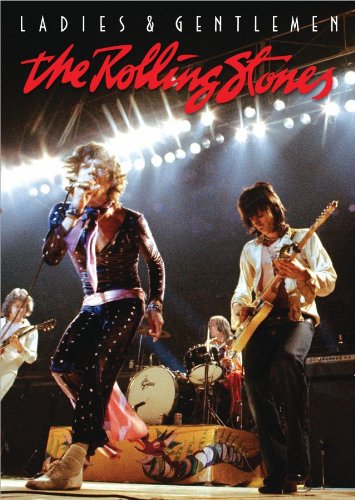
The Theatre release Ladies and Gentlemen The Rolling Stones which was filmed during the Exile promotional tour in the States was remastered and released on DVD in the fall. The set featured many of the songs from Exile that are not played much by latter day Stones such as “Sweet Virginia”. The sound and film looked phenomenal and it was good to see Mick Taylor at his best, an integral part of The Stones during that period and in truth is really missed nowadays.

Finally, to finish off the year of The Stones, Keith Richard’s Autobiography Life was released in November along with a compilation of his X-Pensive Winos recordings from the late Eighties.  The Rolling Stones managed to keep in the music news almost as much as Taylor Swift.

Original cover for Straight Up

It also seemed to be the year for catalog re-releases as Apple Records remastered most of the Apple back catalog of non-Beatles recordings by Badfinger, Mary Hopkins, James Taylor and released all of them at the same time.

FnA Records continued to not only re-release 80’s metal catalog but also unearthed several recordings that were set to release but never were by labels such as A&M and Geffen when the Seattle scene took over.  There were several recordings by different artists from The Thirteenth Floor Elevators 45’s to Carnival Season vinyl that saw their material released on CD for the first time.

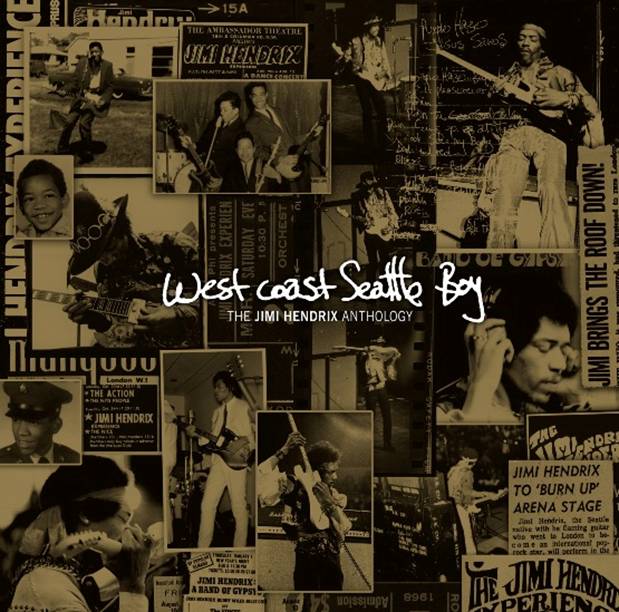
Janie Hendrix continues exquisite releases of all things Jimi Hendrix with the release of West Coast Seattle Boy that not only has yet another Bob Dylan song done by Hendrix but goes back to the background of what he was doing before going to England with expanded packages that include a disc full of Isley Brothers and other nuggets, pre-Experience as well as a DVD Voodoo Child that even talks about his Nashville days.

Country continues to sell big, but real, traditional or Texas Country has been swallowed up by the Americana scene. At least it has found a home. As far as innovation in current pop country the last leap forward was Miranda Lambert’s Revolution and that was released last year.

Here are few honorable no less worthy than the list:

Ratt – Infestation

Merle Haggard – I Am What I Am

Kort – Invariable Heartache

Charlie Louvin – The Battles Rage On

Marty Stuart – Ghost Train

Jim Lauderdale – Patchwork River

Crazy Heart – (Soundtrack) Various Artists

Okay, now for my Top Ten. In making my choices, I not only looked at material, but innovation and game changers, records that made things interesting.

10- Carnival Season / Misguided Promises / ARRCO

This represents not only a re-issue on CD for the first time of regional Birmingham band Carnival Season that features local legend Tim Boykin, but, painstakingly includes every recording the band made during their short time together as well as extensive liner notes that tell the whole story of the late 80’s rockers. It sits well on the shelf with bands like Redd Kross as well as The Replacements. The band has been doing occasional reunion gigs playing not only this set but some new stuff as well over the last couple of years. This was one of the first alternative rock bands out of Birmingham, Alabama.

Featured tracks: “Misguided Promises”, “Please Don’t Send me to Heaven”

9- Robert Plant / Band of Joy / Rounder –Esparanza

Robert was in the middle of recording the follow up to Raising Sand with Allison Krauss when he pulled the plug when he felt the magic wasn’t there. He retreated to Nashville and entrusted Buddy Miller to put together a band that features Darrell Scott, Byron House, Marco Giovino and Patty Griffin and secluded into Woodland Studio to see what they would come up with. The result is obscure covers as well as a Plant-Page piece from Walking into Clarksdale that shows some Zeppelin flavor with uncharted Americana territory which sonically could have only happened with Nashville session players in such a short time. The band gelled in the studio and continues to roll across Europe and Stateside. This is probably Buddy Miller’s best Production effort yet.

Featured tracks:  “Angel Dance”, “You Can’t Buy My Love”, “House of Cards”

8 – Ryan Bingham and The Dead Horses / Junky Star / Lost Highway

Ryan tends to write like a modern day Dylan but his voice is more like John Kay from Steppenwolf. Ryan who comes from the red dirt scene of West Texas and now lives in so-L.A. got national notice with the Grammy winning “The Weary Kind” from the Crazy Heart soundtrack defiantly writes about a drifter leaving behind a dead end life to go to California only to end up sleeping on the Santa Monica pier.

Featured tracks: “The Wandering”, “Junky Star”

7- Sweet Apple / Love & Desperation / Tee Pee

Put together by members of Dinosaur Jr. and Witch, this little known defiantly Hard Rock and other worldly idea collection of songs with its Roxy Music rip off style album cover is actually closer to something between an early Alice Cooper (when they were a band) and Ziggy Stardust era Bowie. The album kicks off like a Raspberries send off with Guidedbyvoices production and then the desperation begins with some morbid love lost desperation with a chugging Alice Cooper band style with lyrics like ”Looking out the window, watching people fall, how I wish I could fall to death”. It’s a rock and roll gem this year.

Featured tracks: “Do You Remember”, “I’ve Got a Feeling (That Won’t Change)”

6 – Preservation Hall Jazz Band / Preservation / Preservation Hall Recordings

What a fantastic album. A collection of well-known New Orleans Ragtime with this important Horn based band where the tuba still carries much of the bass part, mashes PHJB with an all-star cast of vocalists such as Andrew Bird, Pete Seeger, Ani DiFranco, Ritchie Havens, Steve Earle as well as the sultry vocals of Memphis’ Amy LaVere.  The band ended up on tour with Maroon 5 this year.

Featured tracks: “Blue Skies”, “Baby Won’t You Please Come Home”

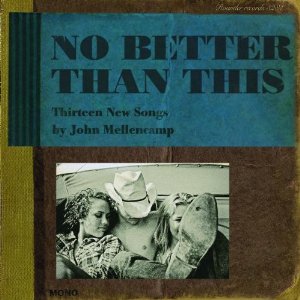
5- John Mellencamp / No Better Than This / Rounder

Recorded for the most part at Sun Studios with one RCA 44 ribbon mic into vintage Ampex Analog gear, John not only sounds like the old Sun recordings, this sounds like old tape that had to be baked in a microwave to finally put it on digital media. It was not only a great idea with equal parts Cash country, Rockabilly and blues but probably his best album since Scarecrow. The T Bone Burnett produced masterpiece even got airtime on WSM.

Featured tracks: “No Better Than This”, “Coming Down the Road”

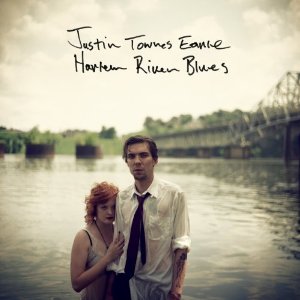
4- Justin Townes Earle / Harlem River Blues / Bloodshot

If you missed it, Justin just rolled a third strike in three years. Every album has been decidedly Justin with marked differences and excellent songwriting. This would be his “Ode to New York City” where he now calls his second home.  Jason Isbell (Drive by Truckers, The 400 Unit) puts in guitar duties and gives this more of an edgy guitar feel as well as some straight up Rockabilly. It really would be cool to see a pure Rockabilly album in the future.

Featured tracks: “Move Over Mama”, “Workin’ for the MTA”, “Christchurch Woman”

3- Black Mountain / Wilderness Heart / Jagjaguwar

This album sometimes feels like Led Zep III and Deep Purple Fireball at the same time. The duality vocals of Stephen and Amber still remind me of a haunting Jefferson Airplane with the production sounding very early 70’s analog, sometimes acoustic but when they rock it’s got Jon Lord style Hammond B3 all over the place. Although the first album by this Vancouver band may have been a defining moment this is the one that makes me wants to crank the stereo full blast on road trips.

Featured tracks:  “The Hair Song”, “Old Fangs”, “Let Spirits Ride”

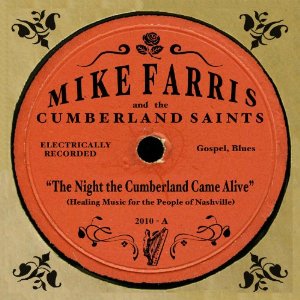
2- Mike Farris and The Cumberland Saints / The Night The Cumberland Came Alive / Entertainment One

Recorded in just six hours just two weeks after the Nashville Flood in a downtown Nashville church just blocks from the flooding, Mike shows that his bluesy/gospel voice can sound fantastic over anywhere he wants to go. Mike has been everywhere from Indie Rock, Blues, Gospel, working with Double Trouble to now this pre-war Gospel Blues style gem working with The McCrary Sisters, Sam Bush, Byron House and members of The Old Crow Medicine Show, his originals mesh well with the rare covers. He showcased the album at Cannery Ballroom during the Americana Music Festival and it was electrifying.

Featured tracks: “Wrapped Up, Tangled Up”, “Down on Me”

1-She & Him /Volume Two / Merge

Zooey Deschannel & M. Ward are some kind of modern Indie Captain and Tennille and somehow it works. Zooey has a sunny California breeze running through her muse that translates into a digital era take on The Beach Boys versus Phil Spector. Even though the material is fresh it makes me daydream of being back on the beach in Santa Cruz when I was six with my Mom and little sister.

Featured tracks: “In The Sun”, “Don’t Look Back”,”Lingering Still”

– Brad Hardisty, Nashville, TN     thenashvillebridge@hotmail.com

The new Jimi Hendrix Anthology West Coast Seattle Boy bonus DVD Voodoo Child answers a lot of questions about Jimi’s time in Nashville, which for the most part is an unknown piece of the puzzle.  Jimi not only formed his first band The King Kasuals with Billy Cox on Bass  while in Nashville but it was here that he cut his teeth with some of the best Rhythm and Blues acts of the day.

Jimi Hendrix at Ft. Campbell, KY

The first step to Nashville for the Seattle, Washington native was joining the Military. “I was 18. I figured I would have to go into the Army sooner or later, so I walked into the first recruiting office I saw and volunteered. I wanted to get everything over with before I got into music as a career so they wouldn’t call me up in the middle of something that might be happening. “

Jimi wasn’t able to sign up as a musician because he had no formal musical training so he joined the most elite outfit he could. The 101st Airborne Division, The Screaming Eagles of Ft. Campbell, Kentucky. He wrote home “Well Dad, here I am exactly where I wanted to go in the 101st Airborne.”

Young Jimi with Red Danelectro

Jimi wanted to succeed for the sake of his family name as a member of the Screaming Eagles in the U.S. Army. One of the first requests home was to send his guitar, “P.S. Please send my guitar as soon as you can. I really need it now.”

The one thing that Jimi gave up when he went into the military was about to become what he always wanted; music would become the center focus of his life. He was in the military for thirteen months when he got his ankle caught in a sky hook and he broke it. He had become frustrated with the military life and the inability to play music and decided to tell them he hurt his back too. They let him out,  July 2, 1962, just prior to the troop increase in Vietnam.

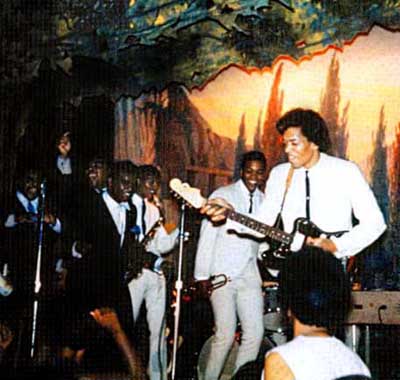
Photo Date 1963, probably at Del Morocco, Jimmy (Jimi) ,notice Epiphone Coronet, Silvertone Amp, Billy Cox, 3rd down, Nice Fender Jazz Bass, Fender Amp. Jimi was notorious for letting his stuff go into hawk.

Jimi became more serious about the guitar while still in the Army and decided to head south of Kentucky a few short miles to Nashville to see if he could earn money playing the guitar.  He moved into a housing development during the civil rights movement.  In fact he was arrested once along with Billy Cox in 1962. “Every Sunday we would go down to watch the race riots. We took a picnic basket because they wouldn’t serve us in the restaurant…Sometimes if there was a good movie on Sunday there wouldn’t be any race riots.”

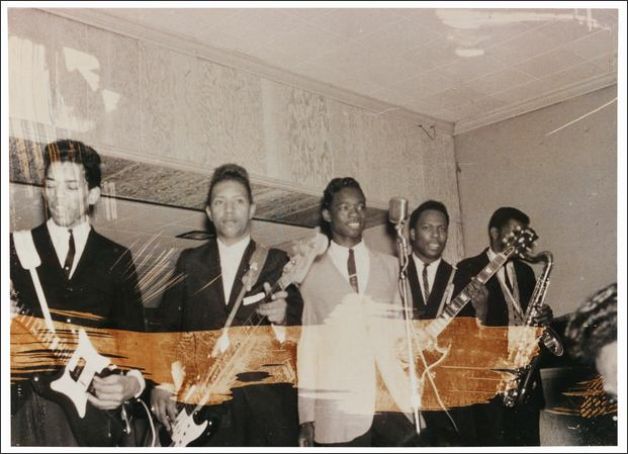
The Bonnevilles, 1962, Clarksville, TN at The Pink Poodle just prior to move to Nashville.

Ft. Campbell had been where Jimi had become friends with  Billy Cox, a Bass player born in West Virginia, raised in Pittsburg, PA who also settled into Nashville for the music opportunities.

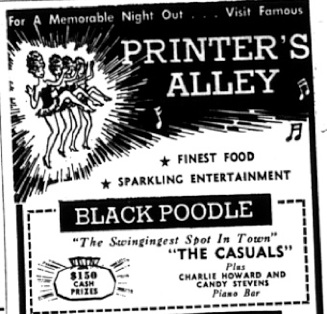
Together. they formed The King Kasuals. The band played at clubs like the Del Morocco on Jefferson Street as well as gigs on Printers Alley. Jimi did get a little studio time, but, engineers found him too experimental when he got to recording as a back up musician and Jimi had a hard time making some extra money as a studio musician.

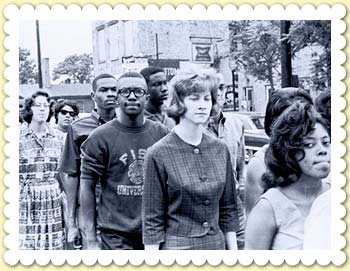
Mid-60’s Nashville Civil Rights March

Hendrix waited for his Army buddy and bassist Billy Cox to get out and together they came down the road to Nashville to form their first band – King Kasuals. King Kasuals became the house band of the now-gone Club Del Morocco (the owner of which ended up bailing the two out of jail after a Civil Rights demonstration downtown!). Hendrix played at so many of the clubs in Printers Alley and along Jefferson Street – places where the likes of Etta James and James Brown were performing. Hendrix took his guitar everywhere in Nashville – on the bus, to the store, on a walk. Nashville is where he really developed his guitar playing. He said so himself: “That’s where I learned to play really…Nashville.” – 365nashville.com

“Hendrix credits Nashville as the place that he really learned how to play guitar. That still freaks out most people who think of Nashville as just country music,” says Joe Chambers, the founder of the Musicians Hall of Fame in Nashville.

Chambers recounts how in 1962 Hendrix wound up at the army base at Ft. Campbell, Kentucky, and met fellow musician Billy Cox. They became fast friends and a short time after moved to Nashville, some 60 miles away, and lived together on Jefferson Street, above a beauty shop called Joyce’s House of Glamour.

“I actually saw Jimi Hendrix one night at Printer’s Alley. He was in his private’s uniform,” says Norbert Putnam, a musician, studio owner and producer with a long list of credits in Nashville.

Hendrix soaked up the style of the blues players in the bars along Jefferson Street. “You gotta be pretty good to get their attention,” Chambers recalls his friend Billy Cox saying. “Jimi went to sleep with his guitar on, woke up with it on, walked out the door with it, and went to the movie theater with it.”

Jimi with Buddy and Stacey “Shotgun” Nashville TV Taping

Some of the first video footage ever shot of Hendrix was on Nashville’s WLAC Channel 5 television show Night Train. You can see him on a 1965 clip backing up Buddy & Stacy, looking freaky and sliding his hand over the front of his guitar’s neck. Chambers says Hendrix and Cox played the clubs on Jefferson as well as the club circuit from Murfreesboro to Tullahoma. – From Rock In The Country: Nashville’s Secret History By Davis Inman 12/17/2010, American Songwriter

King Kasuals, Jimi, Billy

Jimi left Nashville to be near his Grandmother in Vancouver in December of 1962 and played with a band called Bobbie Taylor and The Vancouvers, that featured Tommy Chong of comedy team, Cheech & Chong, until heading back to the south in the spring of 1963.

The gigs continued with Billy Cox and the band. Jimi continued developing his chops and playing wherever and whenever he could.

Jimi Hendrix did some uncredited session work while in Nashville and also played for current “Nashville’s Queen of The Blues” Marion James and Roscoe Shelton before leaving Nashville. Billy Cox also played bass for Marion James who still resides in Nashville and is signed to Ellersoul Records.

Billy Cox wrote two songs for Frank Howard & The Commanders and both Billy and Jimi played on the sessions for “I’m So Glad” and “I’m Sorry For You” during those Nashville days.

Billy Cox stated in a Nashville Scene interview in 2010 that he is in the process of writing a book about his time with Jimi Hendrix in Nashville; nobody could tell the story better than Billy and he hopes to clarify between myth and legend what happened in those early times.

Jimi in Nashville

Imperials drummer Freeman Brown played with Hendrix while he was in Nashville. “There used to be a theater called the Ritz Theater down on Jefferson Street, it was there for the longest. We went to a show one day and Jimi carried his guitar in a shopping bag. He always kept his guitar with him. And every time he would just play, just play, just play; it was kind of like having a little baby to him.” “It was like a third arm, you know. And like he (Freeman) said, I saw him on a bus with it one day, you know, in a shopping bag, in a plastic bag, whatever. That’s the way he was. It was not unusual at all. Not usual at all,” confirms George Yates.

Larry Lee, 2nd guitar with Jimi Hendrix at Woodstock

“Jimi and I, being left-handed guitar players, just talked. We hit it off real smooth,” Yates recalls. “Everybody thought we were brothers. We were skinny, very young, and I guess, women chased us, you know. We played together one time. It was with a group called The Bonnevilles, and I believe Jimi named the group. His manager had us on the road one night, supposedly the three best guitar players in town- me, Jimi, and Larry Lee from Memphis (The same Larry Lee that played with Jimi at Woodstock). The people just went crazy because we were all doing crazy acts, you know, guitar behind the head, biting it with the teeth, falling on my knees, and I have bad knees because of it today. But Jimi was the showman. We were admirers of each other, you know.” – Night Train To Nashville by Tina Robin

It was at this time he met a promoter named Gorgeous George, who got him on as a touring guitarist. “The idea of playing guitar with my teeth came to me in a town in Tennessee.  Down there you have to play with your teeth or else you get shot. Those people were really hard to please.“

The earliest known video of Jimi Hendrix was playing “Shotgun” with Buddy and Stacey  at a Nashville television studio in May 1965.

It was a Soul package that came into Nashville featuring Sam Cooke, Solomon Burke, Jackie Wilson, BB King and Chuck Jackson that kick started his professional career. “I got a little job playing in the backup band.  I learned a lot playing behind all those names every night.”

Jimi’s star across from Country Music Hall of Fame

He went on a 35 day tour covering most all of the south, the Seattle boy was now in the thick of a tour that took him to all parts of the country.  He sent a postcard “Dear Dad, just a few words to let you know I made it to South Carolina. Tell everybody “Hello” with love, Jimmy”

Jimi with The Isley Brothers

While in New York, he entered an amateur contest at the Apollo Theater and won $25 after taking first place.  It was there in New York that The Isley Brothers asked him to stay and play.  He played with them for a while but he was ready to break out of being in the back up position and desired to direct his own career.  He left The Isley Brothers when they made it back to Nashville on a tour stop.

He then joined a band that took him to Atlanta, Georgia where he met Little Richard and was asked to join his band. “Dearest Dad, I received your letter while I was in Atlanta. I’m playing with Little Richard now. We’re going toward the West Coast. We’re in Louisiana now. But my address will be in Los Angeles. “

Jimi with Little Richard

He only played with Little Richard for five months and left after not getting paid for a period of five and a half weeks.  He was ready for a change after the Little Richard stint. “I couldn’t imagine myself for the rest of my life in a shiny Mohair suit with patent leather shoes and a patent leather hairdo to match. “

“I didn’t hear any guitar players doing anything new.  I was bored out of my mind. I wanted my own scene making my own music. I was starting to see you could create a whole new world with the electric guitar because there isn’t a sound like it. “

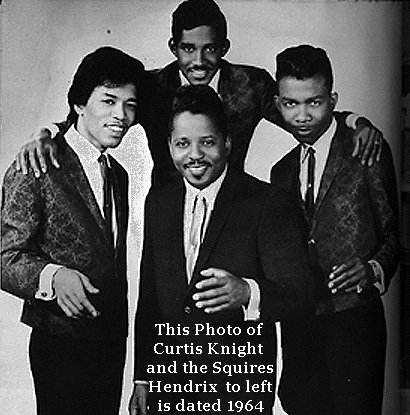
Curtis Knight and The Squires

He heard music in his mind that he wanted to do but he knew it was going to be hard to find people to do it with.  “I went back to New York and played with this Rhythm and Blues group called Curtis Knight and The Squires. I also played with King Curtis and Joey Dee. “

It was after this period of time in Nashville, travelling with some of the greatest artists of the day that he became what the world knows as Jimi Hendrix. Chas Chandler, bassist for The Animalswas invited, by Keith Richards girlfriend at the time, Linda Keith (she also “loaned” Jimi one of Keith Richard’s guitars to Jimi), to see him play with his band, Jimmy James and The Blue Flames and that is where the usual story of Jimi Hendrix begins.

Band of Gypsies : Billy Cox, Jimi Hendrix, Buddy Miles, who had kept on Jimi for some time to get their own band going.

Although it may have been a short couple of years, his friend Billy Cox would rejoin him with Buddy Miles as Band of Gypsys and they recorded some of the funkiest three piece soul ever done. Billy would be with him at Woodstock and record and perform as a member of his band until he passed away. Billy still lives in Nashville.

Jimi went through many transitions in life, moving several times and being called by many different names, first, Johnny than James, “Buster”, Jimmy, with many knicknames along the way including “Chop Suey” and finally Jimi. Through all the changes, Jimi managed to be very positive as his guitar was like a magic carpet guiding him on his travels.

If Jimi had not joined the Army and started his journey through the south, his story might not have been what it became.  By doing what other great guitarists do, be it Country or otherwise and joining the Nashville scene and becoming a touring musician he accelerated his abilities quickly and became the Voodoo Child with a mojo hand made of gold becoming the most important guitarist of his day, a great songwriter and  the highest paid rock showman of his time.

Many of the quotes that are by Jimi Hendrix, were read by Bootsy Collins and are featured in the Documentary, Jimi Hendrix: Voodoo Child.

” Music is the most important thing. I’m thinking of my future. There has to be something new, and I want to be a part of it. I want to lead an orchestra with excellent musicians. I want to play music which draws pictures of the world and its space.” – Jimi Hendrx

Jimmy James and The Blue Flames

Brad Hardisty, Nashville, TN     thenashvillebridge@hotmail.com

The Beatles / Ed Sullivan Show / 1964

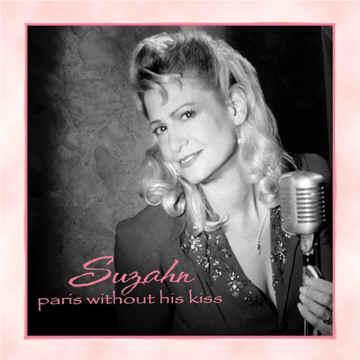
This Saturday at Noon, 3rd and Lindsley plays host to The Nashville Beatles Kids Concert  which will  feature 15  students of Suzahn Fiering who is a guest instructor at The Liverpool Institute for The Performing Arts (LIPA) a University founded by Sir Paul McCartney and Sir George Martin.

The students are between the ages of 7 and 16. Suzahn states” The Beatles catalog is a great way to tune kids onto popular music, good lyric writing, cool harmonic structure and lots of chords and harmonies.  The songs speak for themselves whether they are played simply (as they are with the younger students) or with complicated arrangements.  The Beatles catalog offers such a wide variety of challenges ranging from easy to difficult.”

Suzahn Fiering

The Beatles song catalog is so diverse and is a great way to raise the bar for young musicians. “There couldn’t be a better educational tool for pop songwriters, singers and instrumentalists. My students get the confidence they need playing these songs and that makes it easier for me to teach them how to read and write music and make the transition into Classical and Jazz music as well. “

The students will be joined by Fred Lawrence (former pianist for Waylon Jennings and also the father of student Eric Lawrence) and local session drummer Larry Murov. It will be a great opportunity for some of Nashville’s youngest future musicians and songwriters to showcase at one of Nashville’s finest clubs.

Suzahn Fiering will be returning to Britain in March 2010 to teach Songwriting at LIPA’s Paul McCartney Auditorium.  This performance coincides with the announcement that the entire Beatles catalog will now be available on I Tunes. The Beatles music continues to inspire future generations by transitioning into new current music delivery formats.

– Brad Hardisty, Nashville, TN      thenashvillebridge@hotmail.com

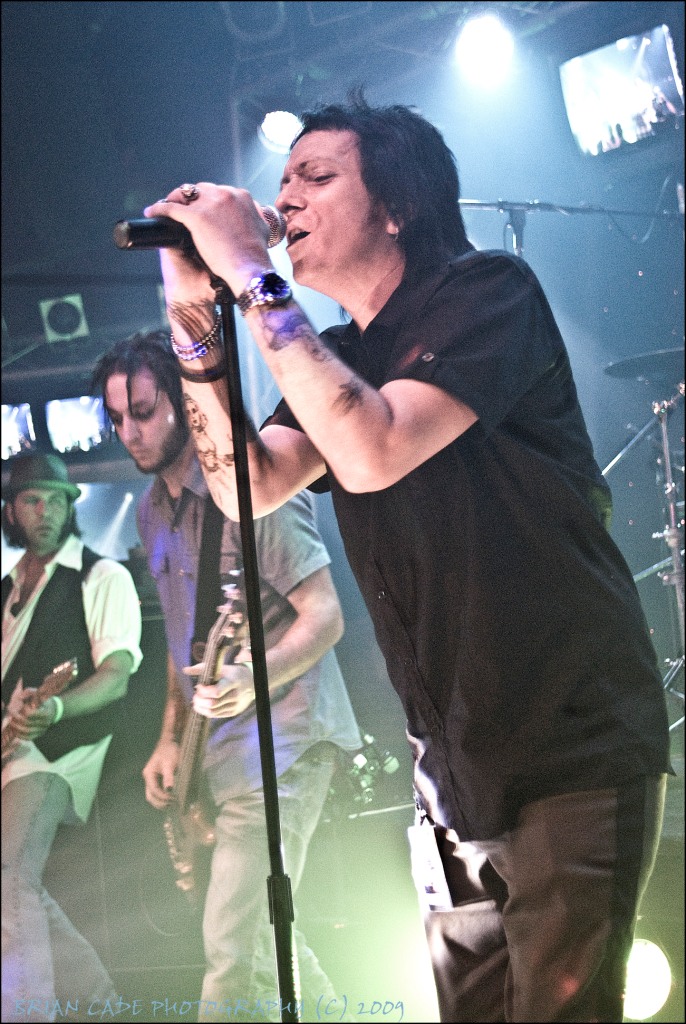
courtesy Brian Cade Photgraphy

November 19th, mark it on your calendar, will be a big night for Rock City Angels performing live with a forward march and a look back to the storyteller past, where they will be celebrating the release of Midnight Confessions on FnA Records, a collection of songs recorded from Memphis to England with Brian Robertson of Thin Lizzy fame on what would have been their second Geffen Records release.

Bobby Durango  talked about Midnight Confessions;  a collection of songs spanning three years after the release of their first Geffen album Young Man’s Blues. “We had the same A&R as Guns n Roses at Geffen and that is where they put their money and promotion”.  

The label didn’t give them an idea of when they would drop the second record, “The A&R guy just kept saying “This stuff is great but I don’t hear THAT SONG” it was almost like Geffen was saying we are not going to put money into this”.

Rock City Angels went through several lineup changes that even included Brian Robertson of Thin Lizzy featured on “Heart and Soul” between 1989 and 1992 before they were sold a bad idea. “Bands are much more savvy now. I just wanted to be a musician, not a businessman. Our lawyer was in collusion with the label. He was the one who sold us on the idea of declaring Bankruptcy.”

Rock City Angels were told at the time by their own Lawyer that when it was done Geffen  Records would sign them again, when in actuality it was a way to wash their hands of the band without having to buy them out of their contract. The tracks that make up Midnight Confessions are works in progress that would have eventually made up their second Geffen release.

Bobby isn’t bitter, “If you listen to the record (Young Man’s Blues) it still holds up, a lot of bands can’t say the same thing.” Bobby hates being lumped in with the hair band scene, “We were more like The Stones. It’s time to clear the record. For the most part our fans know the difference”.

Rock City Angels has been busy this last year after the release of their newest material “Use Once and Destroy” a straight ahead rocker, “We were never about going after that elusive hit. We were after an overall theme like Aerosmith Rocks:  A great album. Use Once and Destroy is what would be an official follow up to their first album.

They will feature at least two gems from Midnight Confessions, ““Sweet Ambition” sounds killer and we have never done it live. We have an updated arrangement of “Shattered Shake””. Neither song has ever been performed live and will make their debut on November 19th at The Muse in Nashville.

They will perform songs from all of their releases, making sure to mix crowd favorites with newer material and diamonds from the past.  It will be a night that kicks off renewed interest in the band especially in Europe. “We just had a five page article come out in Popular One in Spain. We hope to get over to Europe; we have a lot of fans over there.”

There is still a lot of unreleased music as well as new stuff to the forefront. “Geffen spent a lot of money on the first album. We actually recorded it once with Producer Jim Dickinson (The Replacements, Big Star, Mudhoney, Mojo Nixon) and Geffen decided we had to re-record it and the second recording became Young Man’s Blues. I still have that first recording”. Okay, it’s time for Geffen to consider a re-release with both mixes.

The current lineup of Bobby Durango, Pagan Raygun, Jorge Hernandez, Mark Binko and Adam Keller is primed and ready for a killer show. “We have a great future ahead of us, so… fuck ‘em”. Enough said.

Rock City Angels - Midnight Confessions

–          Brad Hardisty, Nashville, TN     thenashvillebridge@hotmail.com
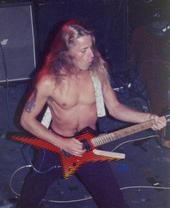
Sitting in/Band Practice/Cabimas, Venezuela, 1983

I left for Venezuela for almost two years in April 1982, leaving behind all my sold dream rock guitar gear, The Dean ML, Gibson White Double neck, Marshall MKII 100 Watt stack and the van to carry it all in, a 1972 yellowish Chevy van. I figured if I was meant to get back into music, the right gear would come back into my life.

My Venezuelan Cuatro and Laud

After about a month in Barquisimeto, Venezuela, I went down to the shopping district to buy a Cuatro, kind of a Venezuelan oversized ukulele, A Tenor Uke of sorts, used to play traditional Venezuelan Folk Music. The cassette recorder I had to record my voice and send home began to be my portable studio, developing Caribbean flavored non sensical flavored blues a Van Halen.

I played some stuff for the locals and it left them totally confused. That Cuatro became my free day muse until months later when I found a Spanish Laud, a twelve string short scale in the flea market in Maracaibo for about $100.  I was able to do almost Classical Acoustic Guitar pieces on that thing and by the time I was living in Cabimas, Venezuela, I would enlist the closest person in the house to help make up songs like “Junkyard Dog” and “U.S. Girls”. For a period of 16 months, these were the only stringed instruments I had.

Moviescreen, 1983

When I got back to Salt Lake City at the end of 1983, I got a crash course in the current Metal scene going to a band practice with Parrish Hultquist and his band Moviescreen. Parrish handed me one of his Charvel Star guitars and I nearly blead to death riffing some of the old riffs I wrote two years prior. It felt good just to be playing through a Marshall before the band got practicing. It had been nearly two years since my last encounter with an Electric through a Marshall rage.

Wally in doorway,me in yellow/blue,Snow College 1980

I went to College in Provo, Utah in the winter of 1984 and my old band mate, Wally Gerrard from Karma would stop by my place at Raintree Apartments on the weekends and ended up letting me borrow some kind of no name half stack and a Japanese lawsuit Black Les Paul to practice some guitar. I ended up jamming with a group called the True Detectives with that rig in Provo, a bunch of Orange County, California semi punks playing “Breathless” X style and a few other punk gems. It was a little mismatch to my still metal ways but it was fun.
Mosrite 12 String

The summer of 1984 I was off to work in Southern California with the intention of returning to school but it never happened.  Parrish had loaned me a guitar he had borrowed from Dana Freebairn, a vintage Mosrite Ventures 12 string with a vibrato bridge. I strung it as a six string, bought a Tom Scholz Rockman and spent the summer jamming in the sand at Newport Beach, California for the summer.

Eventually, I pulled some cash together and purchased a Gallien-Krueger twin 12 similar to the stuff that Alex Lifeson was using at the time. I thought the cool thing was that it had a built in Chorus circuit and had kind of that post punk sound, like Warren Cuccurullo licks.  Living in Orange County, I was getting pulled all different ways, I was still listening to Randy Rhoads but got tuned into bands like U2, The Cult, Souxsie and The Banshees, The Fixx, Missing Persons.  It was Orange County and even if Leatherwolf was hanging at the house where I was staying in Costa Mesa, Metal was kind of an inland music; the beach had punk and related music going on.

Kramer DMZ1000

Near the end of summer, Parrish sent out some copies of the Moviescreen Cassette and wanted me to come back up to Utah and play second guitar. I was having a good time in Orange County but I heeded the call and went back up with my Duran Duran style hair, Gallien Krueger and ended up picking up an aluminum neck Kramer DMZ 1000 at a pawn shop in Provo to get more of the heavy rhythm sound he needed. The problem was the Gallien Kruger didn’t sound like a Marshall and at that point in 1984 it was all about the Marshall. We were supposed to open for a band called Exciter at The Salt Palace when Brian Sorenson, the drummer, got hit by a drunk driver and his hand was busted. I ended up taking him to physical therapy several times a week and within two months I had moved back down to Orange County, California.

I had the exact same White Kramer/1985

When I moved back to Orange County at one time I pawned the guitar and amp to pay for a ring for a girl I was serious about.  That relationship ended and made me re-think, don’t ever sell gear for a girl. I went and bought a cheap white Kramer van halen style guitar at Guitar Center when it was still in Santa Ana with the Floyd Rose vibrato on it. It was the budget model but still did the dive bombs.

I started to settle into the Huntington Beach, California scene where it was almost open warfare between the kids from Downey and Anaheim coming down in black leather listening to KNAC and the surf punks listening to KROQ. In fact, I lived above Jack’s Surf Shop at the corner of Main and PCH Highway and one night when it was still old town with bars, small stores and surf shops there was a full scale riot going on.

I watched from my bedroom window as the KNAC Metalheads numbering about 100 and the surf punks who were into surf clothes, The Ramones, The Toy Dolls and looking the part actually got into a full out fight on Main Street at about midnight in about 1985. I would just rock riffs with the White Kramer/ Floyd Rose/ Van Halen type setup through my friends Fender Deluxe with a distortion pedal.  Finally, somebody got thrown through a plate glass window store front and the cops were coming and everybody scrambled. I could crank that guitar any time of day and nobody cared down by the beach.

Halloween 1986,me in smoking jacket, Derrick Lee-Glam Rocker

Derrick and I put together a group and called them The True Detectives after the band that both of us had jammed with at one time or another. We practiced in the apartment above Jack’s Surfboard Shop and in south Orange County.  We were doing covers like “Dancin’ With Myself”’867-5309”and other party favorites around 1986. When my Aunt died and I left for a funeral and didn’t make a gig I never got called for band practice anymore. What can you say?

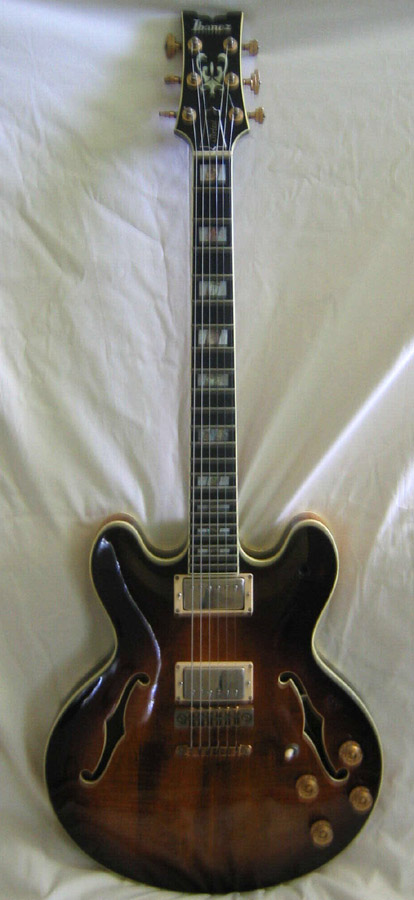
I wasn’t satisfied with the Kramer and wanted a more serious guitar. I was into jazz guitarist John Schofield after catching a video from the album “So Warm” on an L.A. afternoon rock video show. He was playing an Ibanez AS 200 semi-hollow burst guitar and I went in search of one and found one used and traded the Kramer for the Ibanez. I had studied jazz in college but this was the first time I had tried to start incorporating jazz inspirations into my own playing.

Ibanez AS200-my jazz period and beyond

I was kind of on my own, playing my John Schofield-Pat Metheney inspired chord patterns. My friends in Orange County were still into a kind of post punk thing while L.A. strip bands were getting signed left and right and touring the Midwest. I would keep that Ibanez for nearly 20 years and it would survive the rise and fall of a couple of bands, several amps and an upstairs recording studio that is all now part of the past. In an interesting twist, although I had practiced with Moviescreen and The True Detectives, I never did end up playing live; in fact I had not played in front of an audience since Karma back at Snow College. It was like I spent the rest of the 80’s figuring out what I wanted to do with my music while I was busy dating girls and going on with my life.

Snow College -Me,the Tall one next to Professor, Wally dead center on sax

 – Brad Hardisty, Nashville, TN    thenashvillebridge@hotmail.com